Essential strategies and practice techniques for this IELTS Reading question type. Learn how to manage time and improve accuracy.
Originally published July 2017. Last reviewed 3 July 2026.
In this post, we will look at multiple choice and matching questionsin the listening test.
Multiple Choice Questions
You may have read the information about multiple choice questions in the reading skills section and be familiar with the format.
In the IELTS Listening Test, multiple choice questions are testing your skills of understanding the main idea in the recording and your ability to listen for specific information.
Some multiple choice questions start with a question, that has (for example) three possible answers.
Some questions will ask you to select a few answers.
You may be asked to select three answers out of seven. Therefore it is really important that you listen carefully to the recording.
TIP >> You must make sure you read the question before beginning to listen to the recording so that you choose the right amount of answers and have an idea what you are listening for.
TIP >> You should also listen for distractors, as they are used a lot in the multiple choice and matching questions.
TIP >> Concentrate when you record your answers, students often make errors and that loses them marks.
Short Answer Multiple Choice Questions
The first type of multiple choice question you might see is a short answer question. In this type of question, you will see a statement and a number of different options to choose from.
TIP >> You will possibly hear all of the options in the recording, but be careful that you do not just choose the first option and think that it is correct.
TIP >>Vocabulary - look out for certain words like but, however, or though, as they suggest the speaker is going to offer some alternative information.
Question Example
Sentence Completion Multiple Choice Questions
The second type of multiple choice question you may see is a sentence completion question. You will be given an incomplete sentence and you will have to complete it choosing from a certain number of options.
These questions are longer than other questions you will see in the listening test. You should have a quick read through and highlight any keywords you see.
You should also be aware of paraphrasing, as the speaker will probably paraphrase and use synonyms.
Question Example
Multiple Options
Some questions will ask you to select a few options and you must choose the right amount of options (and the right information obviously) in order for your answers to be correct. Therefore it is really important that you read the question before you listen to the recording.
The speaker on the recording might talk through all of the options, so concentrate and listen out for words and phrases that could distract you. These are often in there to trick you into choosing the wrong answer.
TIP >> Try to relax, when students are under stress to choose the right answer then move on quickly, they often lose marks as they choose any option. If you do miss it, there is no harm in taking a guess rather than leaving a blank space.
Attitude And Opinion
In some of the recordings you will hear, you will listen to speakers discussing an issue, making a decision or making an agreement. This means that you will have to identify an opinion or an attitude.
Listen carefully and see how the speaker uses language to convey their opinion or attitude towards something.
For example;
I was reluctant .....
I was surprised......
I am feeling hopeful...........
I'm wary about that............
I am doubtful...........
I feel confused..........
Matching Questions
In matching questions you will see two parts with information. The questions will be numbered and appear in order. This means that the questions will be in the order of the information given in the recording.
You will see a box alongside the question in which to choose options and these are given in a random order. It is a good idea to cross out any options you do not need.
REVIEW AND STRATEGY
TIP >> Read the instructions and questions before you start listening to the recording. What are you being asked to do? Familiarise yourself with the questions and think about the context.
TIP >> Look at the options you have been given and highlight any keywords.
TIP >> Listen carefully for information but be wary of distractors.
TIP >> Be aware of paraphrasing and synonyms.
TIP >> Listen to the information carefully and don't just choose the first option you hear. The speaker will probably mention all of the options - so listen to all and keep looking at the list of options, to select the right ones.
TIP >> If you do miss an answer or were not sure, then it is ok to take a guess. This is better than leaving a blank space and you never know, you might answer correctly!
We hope you found this post useful in helping you to study for the IELTS Test. If you have any questions please let us know in the comments below or on the Facebook page.
The best way to keep up to date with posts like this is to like us on Facebook, then follow us on Instagram and Pinterest.
If you need help preparing for the IELTS Test, join the IELTS Achieve Academy and see how we can assist you to achieve your desired band score. We offer an essay correction service, mock exams and online courses.
Comprehensive guide covering essential IELTS preparation strategies and techniques to help you achieve your target band score.
Originally published July 2017. Last reviewed 3 July 2026.
In this post, we will look at short answer questions in the listening test.
Short answer questions in the listening test, will require you to write no more than a set number of words and/or numbers. You will probably be given a limit, for example, 'No more than two words and/or a number'. If you write more words than the instructions tell you to, your answer will be marked as incorrect.
The short answers only need keywords, meaning you will not be able to write a sentence. These questions are there to see how well you can find specific information and be able to recognise when some information is not needed.
It is really important that you read the instructions of the questions carefully, often when people do not read them and follow them correctly they lose marks. When you are asked to complete questions, you will also be enlightened as to what information you can put into the gaps.
Being able to provide accurate short answers in the listening test is really important in order for you to gain a high score.
For example, you may be asked to:
Write NO MORE THAN ONE WORD for each answer
Write NO MORE THAN ONE WORD AND/OR A NUMBER for each answer
Write NO MORE THAN TWO WORDS for each answer
If your answer does not follow the instructions given, it will be marked as incorrect.
In the IELTS listening test, you must listen for specific information and be able to recognise when some information is not needed.
Exercise 1
Look at the text below and provide an answer that is NO MORE THAN TWO WORDS.
Question - What did Segovia influence?
Spain will always hold a special place in my heart. It was the destination of my first international trip, and where I studied Spanish abroad and started to discover how much excitement the world had to offer.
My favourite part of that first trip was being able to explore smaller cities and towns in Spain that I wouldn’t have known about prior, and that is somewhat off the tourist path. I spent a month in Spain that summer, living in Salamanca and El Puerto de Santa Maria, and exploring the surrounding regions.
From Madrid, you can get to the city of Segovia in less than thirty minutes on the high-speed train, and I recommend getting out there. Famous for its Acazar and Roman aqueduct, Segovia is a gorgeous UNESCO World Heritage Site.
One thing that I found interesting about Segovia is that it’s said that Walt Disney drew inspiration from the majestic Acazar for the iconic Cinderella’s castle.
Answer at the bottom of the page.
Distractors
A distractor is when you are given information that is wrong. This can lead you to choose the incorrect answer. They are common in the IELTS Listening tests, as they test your ability to choose the right information for the answers, by ignoring the wrong information. The distractors will try to trick you into selecting the wrong answer, so you must listen carefully for specific information.
Exercise 2
Listen to the following sound clip which contains a number of distractors. Before you listen, take a look at the questions and think about the context. What words or phrases would you expect to hear? Can you predict?
Question
Write NO MORE THAN ONE WORD AND/OR A NUMBER for each answer.
1. What does he divide the meat into? .............................
2. What does he marinate the burgers with? .................................
Answers at the bottom of the page.
Practice Short Answer Questions
The IELTS listening test will allow you some time to read the questions before you listen to the recording. For the short answer questions, you should read the questions before you start and try to predict the answers, or what type of word would be appropriate for the answer.
Exercise 3
Read the following questions before listening to the sound clip.
Write NO MORE THAN THREE WORDS AND/OR A NUMBER to answer.
1. According to the author, what does she say about writing another Harry Potter novel? ..................................
2. The author doesn't want to write which book? ............................................
3. Was Harry Potter one of the bestselling book series in? .......................................
4. What is the author worth financially? ..........................................
5. How does the author help children around the world? ..............................................
Answers at the bottom of the page.
Exercise 4
Short answer questions can be presented in other ways, for example asking you to listen to a recording and choose options.
Read the following questions before listening to the sound clip.
Write NO MORE THAN TWO WORDS AND/OR A NUMBER to answer.
1. What does the student need to improve?
A. ...............................
B. ...............................
2. What are the writer's obligations to their readers?
A. ...............................
B. ...............................
Answers at the bottom of the page.
REVIEW AND STRATEGY
TIP >> Read the instructions and questions before you start listening to the recording. What are you being asked to do? Familiarise yourself with the questions and think about the context.
TIP >> Look at the questions/options you have been given and highlight any keywords.
TIP >> Listen carefully for information but be wary of distractors.
TIP >> Be aware of paraphrasing and synonyms.
TIP >> If you do miss an answer or were not sure, then it is ok to take a guess. This is better than leaving a blank space and you never know, you might answer correctly!
Answers >>
Exercise 1
Cinderella's Castle
Exercise 2
1. 200g
2. Mustard
Exercise 3
1. Never say never
2. Harry Potter 8
3. History
4. 1 billion dollars
5. Through charity work
Exercise 4
1. A - clear development / B - first sentence
2. A - Readership / B - Thesis
We hope you found this post useful in helping you to study for the IELTS Test. If you have any questions please let us know in the comments below or on the Facebook page.
The best way to keep up to date with posts like this is to like us on Facebook, then follow us on Instagram and Pinterest.
If you need help preparing for the IELTS Test, join the IELTS Achieve Academy and see how we can assist you to achieve your desired band score. We offer an essay correction service, mock exams and online courses.
Essential strategies and practice techniques for this IELTS Reading question type. Learn how to manage time and improve accuracy.
Originally published June 2017. Last reviewed 3 July 2026.
In this post, we will take a look at the reading skills you need to be successful in the IELTS Reading Test and how you can improve your skills.
There are 7 main reading skills you will use during your preparation for the IELTS Reading Test;
Previewing
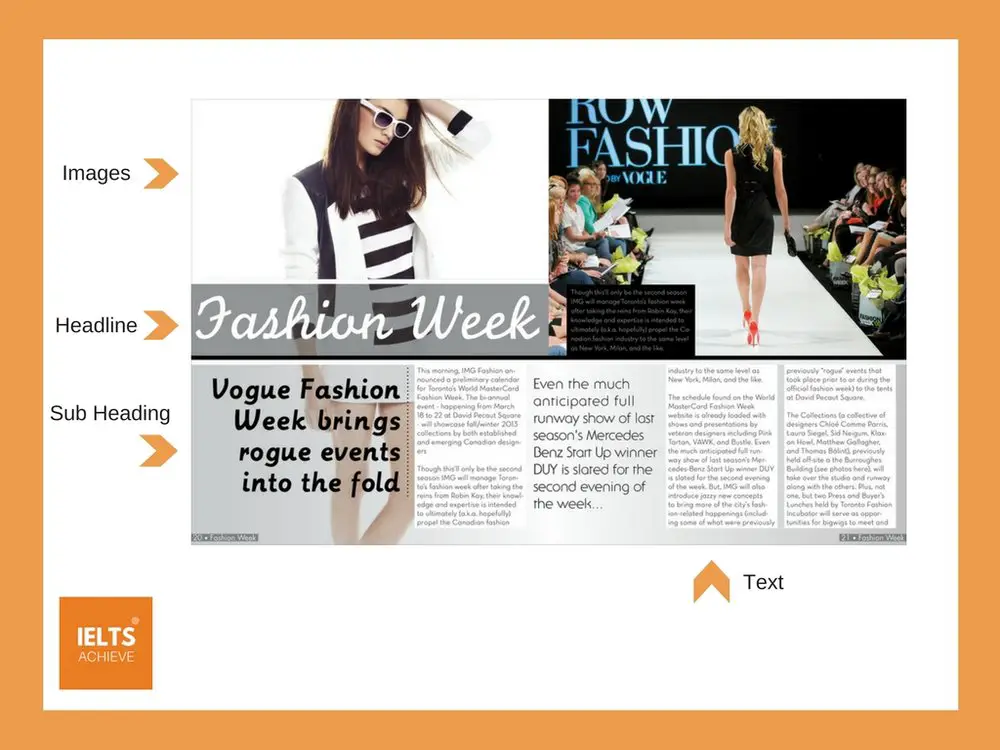
When you preview a text you look at the headings, the layout and any images to get an idea of what the text is about before you decide if you want to read it or not. For example, when you look at an article in a newspaper or a magazine, the headline and images give you an idea of what it is about. Previewing is an important skill to have because it helps you to foresee the content and this makes it easier to understand the text.
TIP >> Next time you read an article think about the headline, subheading and the images and think about the following questions - How do they draw you in to read more? How do they tell you what the article is about?
Predicting Content And Structure
This is when you use your knowledge and guess what a text is going to be about. For example, if you see an advert about adopting animals or donating to animal shelters, you would be able to guess the purpose of the text and the image(s) was to make you want to adopt an animal or help the shelters by donating money, therefore the vocabulary used would be related to this. Predicting is an important reading skill because you can make sense of a text when you already know about the topic.
TIP >>Practice by looking at adverts you see in magazines, online (blogs etc) and look at the vocabulary used and think about the following questions - How does it relate to the topic? How does it tell you about the purpose of the advert?
Source
Skimming
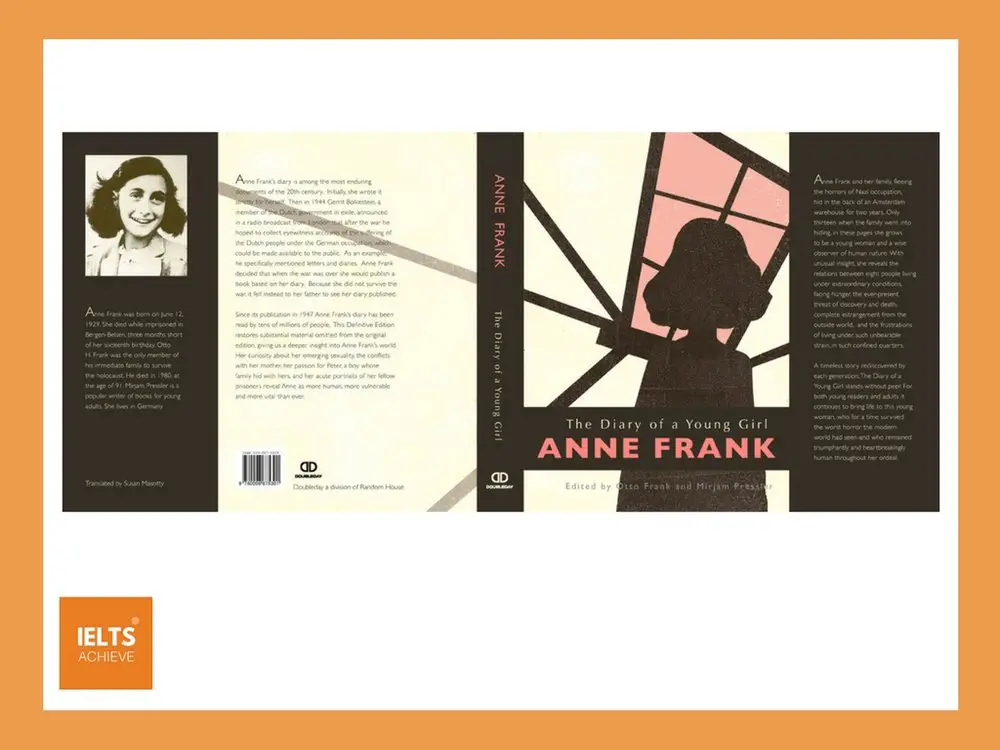
When you skim read a text for the main idea, you read the text quickly to get the general idea of the main topic. When you do this, you are looking for the main idea - not the specific details. For example, you may skim read the back cover of a book jacket to get an idea of what the book is about before you decide to read/buy the book. Skimming is an important skill because in the test you are time conscious, so you need to skim read texts in order to get the main idea, before locating specific information needed to answer questions.
TIP >> Practice skim reading by reading articles, reviews and summaries to get the main idea. Choose content that interests you, not only IELTS practice materials.
When you scan a text to find the information you also do this quite quickly to find what you need. You normally use this skill when you are looking for facts. For example, if you are looking for a train time or the departure gate you need at the airport, you scan the board's looking for the information. Therefore, you use this skill every day when looking at times, dates or places.
TIP >> Practice scanning by looking for information in timetables, the TV guide etc and find facts you need quickly.
Intensive Reading
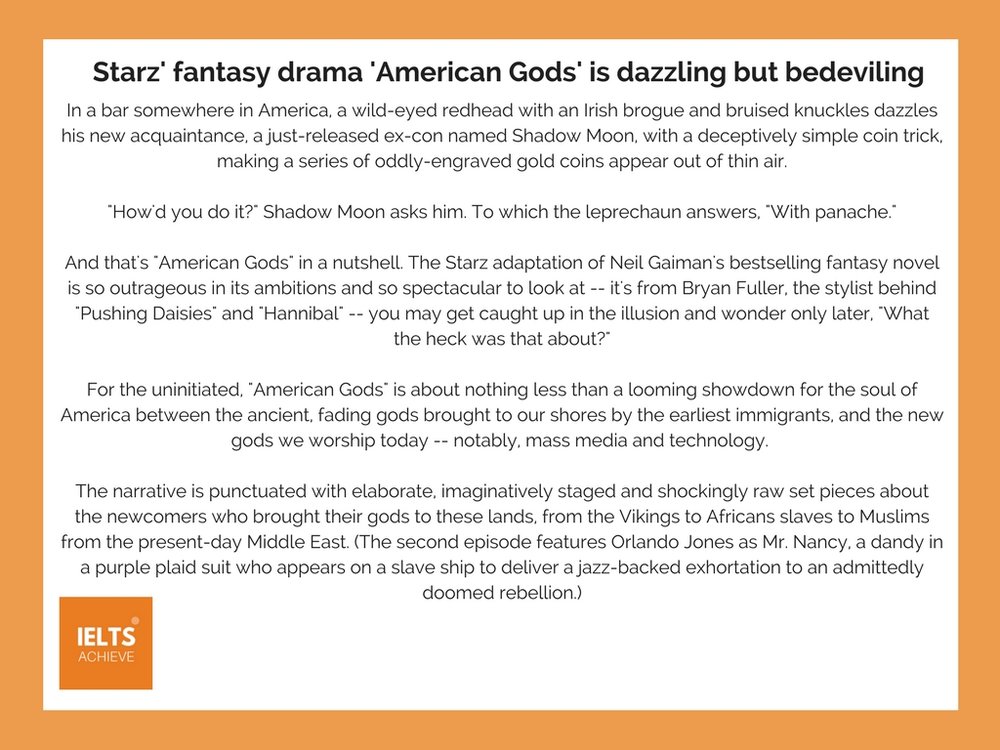
When you read a text carefully and study the information, this is intensive reading. You do this when the content is important. For example, if you had to fill out some important forms, like renewing your passport or filling out a tax return, you would read the instructions carefully, before filling out the forms. You need to read carefully for more detail when you need to understand the writer's meaning. For instance, when reading a tv show review, you might want to read it intensively to find out the details to see if you want to watch it or not.
TIP >> Read reviews and other texts you find interesting and study the content. Think about how detailed the information is, do you understand the writer's meaning?
Look at the review below of the TV Show 'American Gods' - How does the writer tell you what they think about the show?
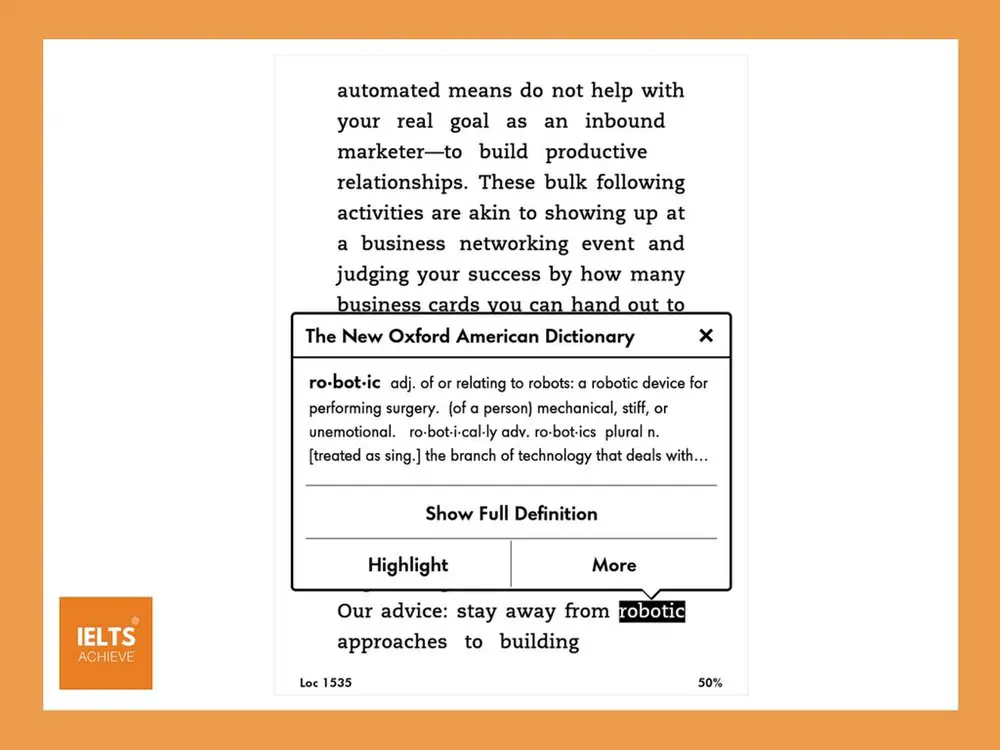
When you are reading and you come across a word or words you don't know, you can sometimes guess the meaning from the context they are in. If not then you will have to look up the meaning in a dictionary (although this is not allowed in the test). For instance, if you were reading a book and you saw a word you did not know, you might be able to work out the meaning from the context of that sentence or paragraph.
TIP >> When you read - keep a dictionary and a notebook with you and write down any words you do not know the meaning of. Alternatively, you can do this easily if you use your smartphone or Ipad. If you have an e-reader, the built-in dictionary will show you the meaning of the words once highlighted. This is so useful for learning new vocabulary.
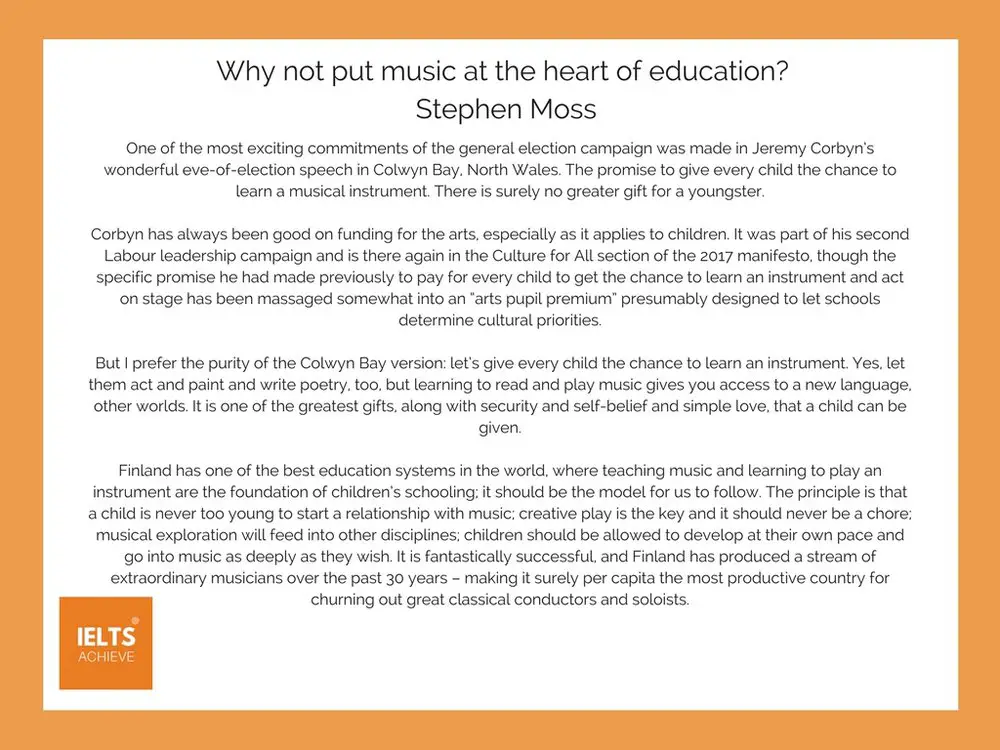
When you read a book, article etc, you should be able to understand how the writer feels or thinks about a subject. For example, in an article or blog about travelling, you may read views on certain places and how they feel when going there. This can help you to understand how they explain their opinions and views through the language they use. Understanding attitude and opinion are important skills because writers do not always clearly state how they think or feel.
TIP >> Read reviews or opinions from opinion sections of newspapers like The Guardian or The Washington Post. Think about how the writer shares their opinion - is it obvious? What language/vocabulary do they use? How can you tell what they are thinking or feeling?
Look at the opinion piece below from The Guardian - how does the writer share his opinion about the topic?
Read more - Read as much as you can in English, choose anything that interests you - not just IELTS practice materials. Read novels, magazines, news articles, blogs and anything else that holds your attention. Reading really helps with your writing, as you learn new vocabulary, grammar and understand how structures work.
Make a note of any new words - Write them down and look them up - this will help you to remember the words and their meaning.
Take note of the grammar - Think about the structures used, look at the sentences, the tenses and the punctuation.
Idea development - When reading news articles think about how the writer leads you through the information, how do they develop their ideas? How do they structure the writing? Where do they put the facts? The opinions?
Opinions - How do they share their opinions with the reader? What kind of language and structure do they use to do this?
Schedule some reading time - when you are travelling on your commute to work, lunchtime, before bed - try to fit in some reading.
We hope you found this post useful in helping you to study for the IELTS Test. If you have any questions please let us know in the comments below or on the Facebook page.
The best way to keep up to date with posts like this is to like us on Facebook, then follow us on Instagram and Pinterest.
If you need help preparing for the IELTS Test, join the IELTS Achieve Academy and see how we can assist you to achieve your desired band score. We offer an essay correction service, mock exams and online courses.
Essential strategies and practice techniques for this IELTS Reading question type. Learn how to manage time and improve accuracy.
Originally published June 2017. Last reviewed 3 July 2026.
In this post, we will be looking at how you can understand the IELTS Reading Test Band Scores for both the Academic Test and The General Training Test.
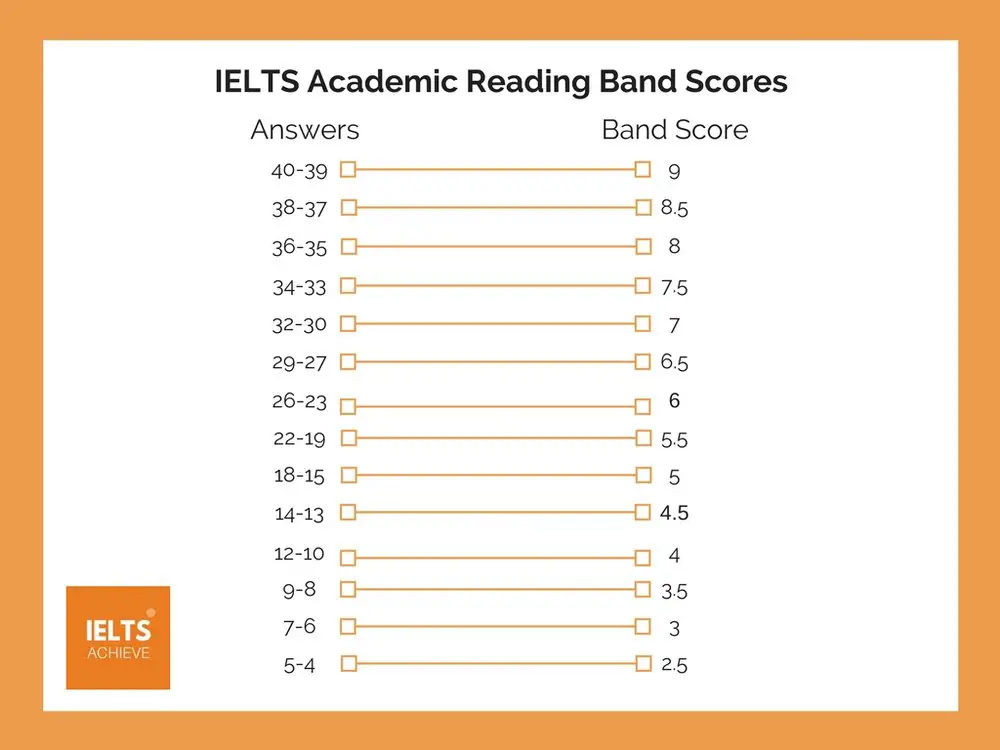
The IELTS Reading Test has 40 questions with each correct answer given one mark. The score you get out of 40 is then converted into a band score. The scores are reported in both whole and half bands.
IELTS Reading Band Score Calculator.
Calculate Your IELTS Reading Band Score
The main difference between the Academic and General Training Reading tests are the type of reading texts the students are given.
General Training
IELTS General Reading Band Score
The General Training texts are generally a bit easier to comprehend, with information from flyers, job descriptions, train timetables, travel brochures, an extract from a novel or job application instructions.
Number of correct answers
IELTS General Training Reading Band Score
40
9
39
8.5
37-38
8
36
7.5
34-35
7
32-33
6.5
30-31
6
27-29
5.5
23-26
5
19-22
4.5
15-18
4
12-14
3.5
9-11
3
Academic
IELTS Academic Reading Band Score
The Academic texts are more difficult, usually taken from magazines, newspapers, journals and research. These feature more complex ideas and vocabulary.
The tables below show the average number of marks required to attain a certain band score in Academic Reading and General Training Reading.
Number of correct answers
IELTS Academic Reading Band Score
40-39
9
38-37
8.5
36-35
8
34-33
7.5
32-30
7
29-27
6.5
26-23
6
22-19
5.5
18-15
5
14-13
4.5
12-10
4
9-8
3.5
7-6
3
5-4
2.5
We hope you found this post useful in helping you to study for the IELTS Test. If you have any questions please let us know in the comments below or on the Facebook page.
The best way to keep up to date with posts like this is to like us on Facebook, then follow us on Instagram and Pinterest.
If you need help preparing for the IELTS Test, join the IELTS Achieve Academy and see how we can assist you to achieve your desired band score. We offer an essay correction service, mock exams and online courses.
Essential strategies and practice techniques for this IELTS Reading question type. Learn how to manage time and improve accuracy.
Originally published June 2017. Last reviewed 3 July 2026.
In this post, see the top 5 reading tips that will help you to achieve a band score 7 or above.
In the IELTS Reading Test for both the General Training and the Academic, the skills needed are the same. The main difference of these tests is the type of texts the students will read. In the General Training Reading Test, the students will read both long and short texts taken from newspapers, flyers, timetables, etc. The Academic students will have 3 long texts that will progressively get more difficult. They will be taken from journals, newspapers, books etc.
You will have 40 questions to answer in 60 minutes, with no extra time to transfer your answers to the answer sheet.
Here is a list of the different types of IELTS reading questions:
Always make sure that you read the instructions before you start looking at the questions or text. The instructions for the reading test are very specific - meaning if you don't follow them exactly you will lose marks.
For example, if the instructions say to only write one word - then look for one-word answers. If you write more than that your answer will be marked as incorrect. The same goes for two-word answers or three, look for the amount of words or numbers that you are allowed to write.
TIP 2: Be Aware Of Timing
Ideally, you should spend around 20 minutes or just under on each text as you have 60 minutes to complete the reading test. In that 20 minutes - look at one text, answer the questions, transfer them to the answer sheet and check them. It is important that you leave yourself enough time to transfer your answers onto the answer sheet and check them.
Practice as much as you can with sample tests, looking at those that challenge you as well as other texts that you find slightly easier. The more difficult texts can take more time, so be aware of how much time you spend on those, practising skimming and scanning skills to increase your reading speed.
TIP 3: Answer Every Question
Try to answer every question, even if you are not 100% sure of the answer. Many students report leaving gaps on their answer sheet because they did not know the answer or they ran out of time. You can try your best to answer each and every question.
TIP 4: Forget What You Know Already
The IELTS Reading Test is testing your ability to understand information in the texts you are given. So don't think about your previous knowledge on the topic, only focus on the text in front of you.
TIP 5: Paraphrasing, Synonyms And Vocabulary
It is really important to study all forms of English when studying for the IELTS Test, looking at how a text is paraphrased, learning new words and using synonyms. Reading more will definitely help you to develop your vocabulary knowledge, as well as recognising synonyms.
When you are studying, use an online thesaurus to check for synonyms and meanings and if you are reading longer complex texts, keep a notebook of words you do not know and their meaning. You will also see how ideas are connected, which can help you in the writing tasks also.
When studying for the IELTS Reading Test, it is important that you take the time to learn how to increase your reading speed, if you are aiming for a band score 7 or higher. During the reading test, you will have texts to read comprising of 1000+ words each. You will not have enough time in the 60 minutes given to read and understand every word in detail. Therefore you must practice with sample tests and learn how to skim read, scan and speed up!
Skimming and Scanning
The differences between skim reading and scanning are;
Skimming - a text quickly for the main ideas.
Scanning - looking through a text for specific details.
Skim reading a text means to read it quickly to find the main idea, it will also show you how the information has been organised. With practice, you should be able to skim read around 100 words in 30/40 seconds.
Scanning a text for specific details is another important skill to develop, as this can help you to find information quickly, like dates, numbers or names.
For more in-depth information on skimming and scanning please take a look at this post.
Speed Reading
Learning how to increase your reading time will give you many advantages in the reading test, including being able to get a higher band score.
By practising speed reading, you will understand the main ideas quickly and be able to locate the information you need in order to answer the questions. Here are some tips to help you to get started >>
TIP 1 >> Cover It Up
Use a blank sheet of paper to cover the words as you read down the page. this can help to stop your eyes from jumping back to text you have already read.
TIP 2 >> Use A Pencil/Pen To Guide You
Try following the words on the page with a pencil or pen, it can help to increase the speed that you go through the text.
TIP 3 >> Time Yourself
Try timing yourself when you are reading practice texts, how much can you go through in 30/40 seconds? How much of that did you understand?
TIP 4 >> Set Goals
Start practising with sample texts and see how much you can read in two minutes, three minutes or five. then, cut that time down less and less and see how much information from the texts you can remember.
TIP 5 >> Look After Yourself
Know when you work best and set aside some time to prepare. If you work best in the mornings (or evenings), set some time to practice in a quiet environment if you can. Rest those eyes and have a break after 30/60 minutes.
Exercise 1
Read the text below taken from an article on the BBC News Website. There are four paragraphs, each with around 100 words.
Using a timer - read through the text to understand the main idea
After only 30 seconds start reading the next paragraph
A
"Mean-spirited" and "wrong-headed" is how teachers' leaders have described Theresa May's plan to scrap free school meals for infant pupils in England. And perhaps to some, it may seem bullish to deny the youngest kids a free lunch, even if free breakfast is on offer. The move has sparked taunts of "May, the meals snatcher" - reminiscent of Margaret Thatcher's infamous cancelling of free school milk. But to Theresa May's Conservatives, it was a policy that no longer added up. The party does not believe "a free school lunch for every child in the first three years of primary school... is a sensible use of public money".
B
It's one of those tough decisions - but a free breakfast, cheap at a 10th of the price, now seems a more desirable alternative to the Conservatives - although the value of the free-lunch scheme has never been assessed. For some, the idea - brought in by the coalition government in 2014 - was always too expensive. It was very much a Liberal Democrat policy and plans were announced by Nick Clegg at his party's conference in 2013. It was not long before his man in the education department, the then schools minister David Laws, was accused of understating the costs of the policy itself.
C
They say the pressures on their budgets are much more about the unfunded extra costs of teachers' pay, pensions and national contributions. Valentine Mulholland, head of policy at the National Association of Head Teachers, said: "After the nightmare of bringing this policy in at breakneck speed and all the capital funding spent to upgrade kitchens and dining facilities, it's pretty sad to see this U-turn." A BBC News Freedom of Information request just six months before it was due to come into force, in September 2014, found 2,700 primary schools needed new catering facilities before they could even think about offering free meals to all infant pupils.
D
Mr Courtney's claim may seem alarmist to some, but it will ring true for many teachers, who often raise the issue of pupil hunger. Nicky Gillhespie, the school business manager at Cheam Fields Primary, said things were very different before her school introduced free school meals."We had children coming in with nothing. "There were some who'd been given a pound by their parents to stop and get something in the sweet shop for lunch on the way to school," she said. The school in Cheam, south London, had no kitchen when the free school meals pledge was made and dinners were driven over to the school by a catering firm.
Questions
Look at the questions below and answer without looking back at the paragraphs for detail, try to remember where you read this information >>
Question 1.1
A - At the beginning
B - In the middle
C - At the end
1. A comparison of school meals now and in the past
2. Many kitchens and canteens had been renovated
3. Some pupils were given little money to buy food/snacks
Skim read the paragraphs for the answers to the following questions >>
Question 1.2
Which of the titles below would be most appropriate for this article?
A. Children's school dinners are badly prepared
B. Free school dinners are no longer an option
C. Why free school dinners are soon to be forgotten
D. Why kids love free school lunches
Question 1.3
Which of the following describes the writer's tone in this article extract?
A. She is giving a neutral account
B. She is showing how shocked she is that school dinners may no longer be free
C. She shows her enthusiasm for the government's response to school dinners
D. She doubts that the situation will change in the future
Answers are at the bottom of the page.
Review and Strategy
TIP >> Skim read the text for the main idea - don't worry if you do not understand all of it, read what you need to answer the questions and move on.
TIP >> Know your timing for each question - three texts with 20 minutes each - including transfer time. Answer the easier questions first, so that you can spend a little longer on the hard questions. The easier questions should come first, as the texts get progressively more difficult.
TIP >> Read the instructions before you do anything - understand what you have to look for before you start reading the questions and the text.
TIP >> Use your other reading skills to help you to increase your reading speed and get the best band score possible!
Answers >>
Question 1.1
A - 1
B - 2
C - 3
Question 1.2
C
Question 1.3
A
We hope you found this post useful in helping you to study for the IELTS Test. If you have any questions please let us know in the comments below or on the Facebook page.
The best way to keep up to date with posts like this is to like us on Facebook, then follow us on Instagram and Pinterest.
If you need help preparing for the IELTS Test, join the IELTS Achieve Academy and see how we can assist you to achieve your desired band score. We offer an essay correction service, mock exams and online courses.