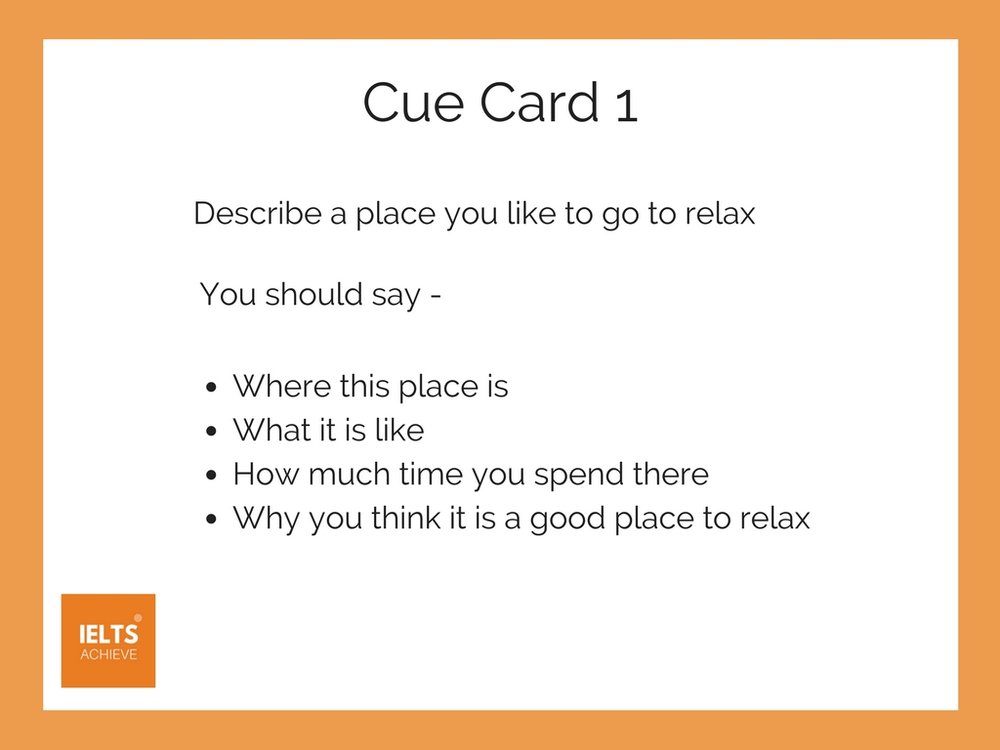
A complete model answer and preparation guide for this IELTS Speaking cue card topic. Includes key vocabulary, follow-up questions, and examiner-approved response strategies.
Originally published September 2017. Last reviewed 3 July 2026.
In this post, you will see a sample cue card question, high-level answer and feedback.
Model Answer
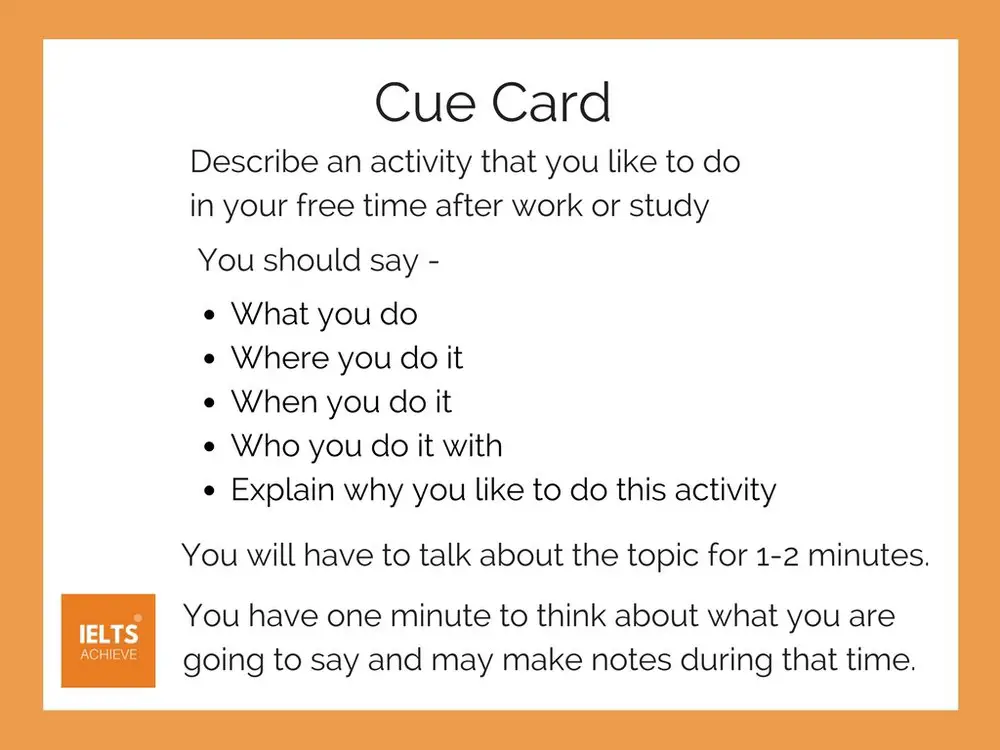
I’d like to talk about how I like to travel to my parents home during the winter. I currently live in Spain and during the winter I like to travel home to visit my parents in the UK. They live in the North of England, so it is often very cold in the winter there. With temperatures getting below zero, you need to wear your warm clothes and make sure that you have the heating on when you are in the house. With living in Spain now, the temperatures in the winter are much warmer than in the UK. You can still sit outside for a coffee in December or January on a sunny day.
I like to visit my parents and in December it snows, with heavy thick snowflakes and a full pinkish, grey sky, the snow can get quite deep. I like to get dressed up in a big thick coat, woolly hat and scarf, put on my Wellington boots and go for a long walk in the snow. It is really pretty and awe inspiring to see everything covered in thick layers of white snow, with an eerie feeling too, as the streets are deserted and everything is quiet. Then after the walk when I return home again, I like to sit and drink tea or hot chocolate by the fire with the dogs and watch some English TV shows. They always have a good programme of viewing in December, with the run up to Christmas.
I really like to visit my parents home during the winter, not only to see them and spend time with them but to enjoy the winter weather. Going for long walks in the countryside or on the beach is really refreshing in the cold weather. You can feel like you have lots of energy after walking your dogs through a forest, so wrapped up in winter clothes so that only your face is exposed.
Being from somewhere that has a regular cold temperature with a vast difference in the seasons is great. I keep my winter wardrobe of a winter coat and wellington boots at their house, as I don’t really need them in Spain. The weather here is never as cold as there unless you travel to places that are high up in the mountains. Winter for me is never the same anywhere else, I always want to go home to get the full frosty experience.
Feedback
This is a strong answer, as there are examples given of what, where and why. The topic has been fully discussed, with additional information added that was not prompted by the bullet points.There are various tenses and structures used, for the past and present. There is also evidence of collocations being used and a high level of vocabulary.
We hope you found this post useful in helping you to study for the IELTS Test. If you have any questions please let us know in the comments below or on the Facebook page.
The best way to keep up to date with posts like this is to like us on Facebook, then follow us on Instagram and Pinterest.
If you need help preparing for the IELTS Test, join the IELTS Achieve Academy and see how we can assist you to achieve your desired band score. We offer an essay correction service, mock exams and online courses.
A complete model answer and preparation guide for this IELTS Speaking cue card topic. Includes key vocabulary, follow-up questions, and examiner-approved response strategies.
Originally published August 2017. Last reviewed 3 July 2026.
In this post, you will see a sample cue card question, high-level answer and feedback.
Model Answer
I’d like to talk about a place I visited with my parents when I was about 10 years old in 1990. We went to the Lake District in Cumbria one summer. This is a lovely place, full of green fields, hills and of course lakes. It was about a 2-hour drive from our house and one into the countryside, the surrounding areas just became more and more beautiful to see.
In the summer, it is the perfect weather for exploring the lakes, from Lake Windermere to Grasmere, we explored the surrounding areas, with a visit to Beatrix Potters house, which is a National Trust owned property and also to the poet William Wordsworth’s house. I was very interested in reading when I was younger and enjoyed visiting the former homes of these well-known writers.
There are also many hiking trails in the Lake District, over the fells and beyond. We walked a great deal, with a map and a compass to guide us and even stopped for a picnic on the top of a hill. I enjoyed walking in the hills, learning about each area and how to read a map.
I would definitely visit the Lakes again and would like to see how the areas have changed since I was last there. I would also like to visit Beatrix Potters house again, now that I am older, I think I would appreciate it more. She is a very inspiring author and illustrator and I love that she was inspired by the nature and animals around her. I would also like to stay in a hotel near to Lake Windermere and if the weather is good, hire a boat and sail around to enjoy the surrounding nature.
Feedback
This is a strong answer, as there are examples given of where, when and why. The topic has been fully discussed, with additional information added that was not prompted by the bullet points, with information being added, from the memories of visiting the places mentioned. There are various tenses and structures used, for the past and present. There is also evidence of collocations being used and a high level of vocabulary.
We hope you found this post useful in helping you to study for the IELTS Test. If you have any questions please let us know in the comments below or on the Facebook page.
The best way to keep up to date with posts like this is to like us on Facebook, then follow us on Instagram and Pinterest.
If you need help preparing for the IELTS Test, join the IELTS Achieve Academy and see how we can assist you to achieve your desired band score. We offer an essay correction service, mock exams and online courses.
A complete model answer and preparation guide for this IELTS Speaking cue card topic. Includes key vocabulary, follow-up questions, and examiner-approved response strategies.
Originally published August 2017. Last reviewed 3 July 2026.
In this post, you will see a sample cue card question, high-level answer and feedback.
Model Answer
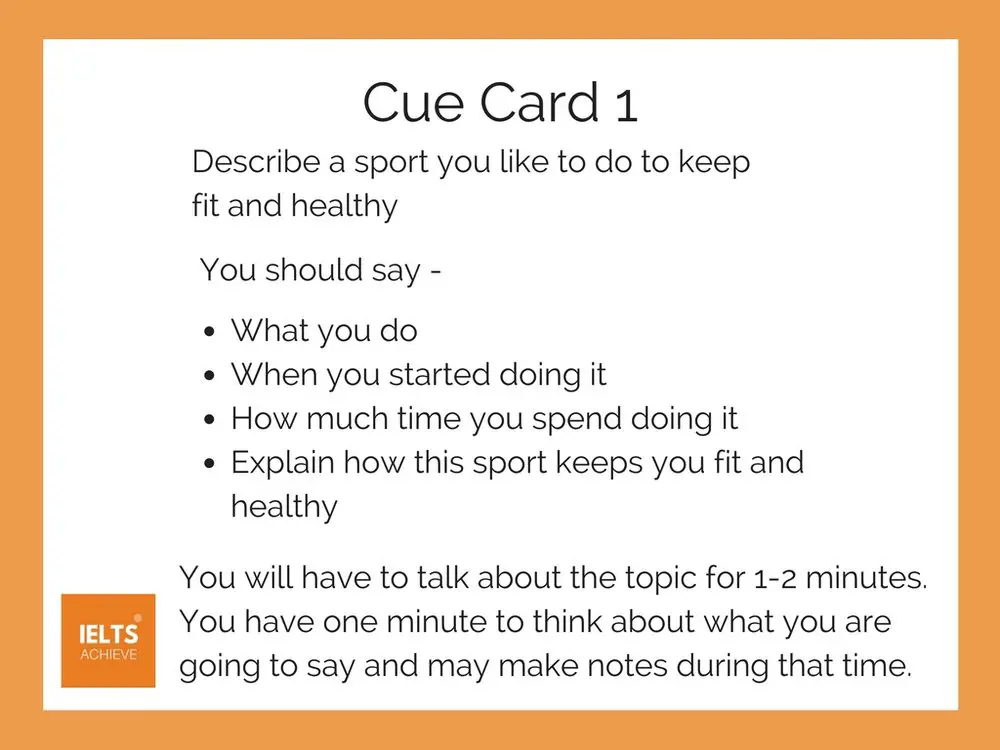
I think it’s important to exercise every day or at least three times per week, so I like to walk every morning and swim as often as I can. I learned to swim when I was at school and since then regularly visited the indoor pool, then when I moved to Spain I was going swimming nearly every day in the summer months. In the winter I like to go to an indoor pool, as it is heated and of course protects you from the elements outside.
There are many beaches close to my house, with crystal clear waters, surrounded by beautiful landscapes and hotels with large swimming pools, so I have a good choice of places to visit for a swim. I like to go to the pool when it is quiet, or the sea when it is calm. The clear salt waters are good for your health and it’s great to swim alongside the fish.
I used to go to a lot of classes in the UK, including Zumba and body combat. I had an accident during a body combat class and broke a bone in my foot, which meant that swimming and cycling were the only options open to me for a while. My doctor encouraged me to go swimming regularly, as he said the salt water would help my foot to heal and obviously to keep up my exercise routine. I really enjoyed swimming, so just kept doing it even after my foot had healed. Swimming keeps me fit and healthy as it is an all over body workout, using all of the muscles it is a great way to do cardiovascular exercise.
Feedback
This is a strong answer, as there is background given and the topic has been fully discussed.There are various tenses and structures used, for the past and present. The notes have prompts and keywords so that the topic could flow and include all of the given points from the cue card.
We hope you found this post useful in helping you to study for the IELTS Test. If you have any questions please let us know in the comments below or on the Facebook page.
The best way to keep up to date with posts like this is to like us on Facebook, then follow us on Instagram and Pinterest.
If you need help preparing for the IELTS Test, join the IELTS Achieve Academy and see how we can assist you to achieve your desired band score. We offer an essay correction service, mock exams and online courses.
Expert tips and strategies for this part of the IELTS Speaking test. Includes sample responses and key vocabulary for Band 7+.
Originally published August 2017. Last reviewed 3 July 2026.
In this post, see the top 6 speaking part 2 tips that will help you to achieve a band score 7 or above.
The IELTS Speaking Test Part 2 lasts 3-4 minutes.
After part 1 the examiner will give you a card or booklet with your question and related ideas you need to talk about.
1 minute >> You will be given 1 minute to make notes.
1-2 minutes >> You will talk about for 1-2 minutes about the topic on the cue card/booklet.
1-2 minutes >> After you have finished speaking, the examiner will ask you one or two questions relating to what you have just talked about.
The cue card the examiner gives to you will look something like this >>
Some students admit to finding this part of the test difficult as they have to give a monologue for 1-2 minutes. They sometimes run out of ideas or start repeating themselves. Practising and developing a strategy can help to make sure that you have success in this area.
Read on for our top 6 tips for getting a high-level band score >>
SPEAKING Test Part 2 TIPS
TIP 1 >> Think of Ideas
When the examiner gives you the cue card during your speaking test, read the topic and the bullet points and think of ideas. It is better to think of a couple of relevant ideas, rather than too many ideas.
The bullet points on the cue card are there to help you to think of ideas so that you can develop an answer. However, you do not have to use those bullet points as a guide and can talk about anything you want in relation to the topic.
The cue card will give you the main topic, then list several bullet points below, stating ‘you should say‘ this means that it is optional. It is up to you, whether you wish to use those bullet points as a guide to help you, and add further information, or not. If there are any bullet points you do not wish to talk about, you may leave them out and talk about something else. As long as all of your ideas are related to the main topic and relevant, then you will still be able to gain a high-level band score.
TIP 2 >> Develop A Strategy
When planning your part 2 monologue, developing a strategy can help you to deliver a high-level answer.
When answering the question, try to be as honest as possible, telling the examiner your thoughts, feeling and opinions. Use examples from your past experiences and be sure to give your opinion. You are allowed to make up information for your monologue, but make sure that you are really confident about what you are saying, as this may lead you into difficulties.
Being honest about your thoughts, feelings, opinions and own experiences is the best way to expand on the topic and give plenty of information to the examiner.
TIP 5 >> Extend Your Answers
When giving your answer, try to make sure that it is not too short – think of ideas that will allow you to talk about the topic confidently for 1-2 minutes.
You can expand your answer by adding more detail and giving examples. Whatever topic you get, you will be able to think of something relevant and share your own thoughts, feelings, opinions and experiences. You can also give relevant examples that can support your points.
Think about the who, what, when, where and how, then think of the details, where you went, who you went with, how you got there, etc.
The answers in part 2 should not be too long either if the examiner feels as though you have gone over your time, they will stop you and ask an extension question.
TIP 6 >> Practice
Practice as much as possible with your native speaking IELTS teacher, a partner or friend. Take a look at past cue cards (see the other posts in this section) and practice answering those questions, making use of the 1-minute note taking time. Whatever you do, don’t memorise any answers, the examiner will see through this and they can give you a low score.
Time yourself and see how much you can say in 1-2 minutes, you may need to develop your answer further or learn to be more concise.
A good way to listen for errors is to record yourself speaking. Listen to your recording and notice any errors you have made, including grammar mistakes, pronunciation, intonation and fluency. Keep practising and use the posts in this section to help you.
I hope that all of these tips have been useful to you in your IELTS practice and preparation, please let me know your thoughts in the comments below >>
We hope you found this post useful in helping you to study for the IELTS Test. If you have any questions please let us know in the comments below or on the Facebook page.
The best way to keep up to date with posts like this is to like us on Facebook, then follow us on Instagram and Pinterest.
If you need help preparing for the IELTS Test, join the IELTS Achieve Academy and see how we can assist you to achieve your desired band score. We offer an essay correction service, mock exams and online courses.
Expert tips and strategies for this part of the IELTS Speaking test. Includes sample responses and key vocabulary for Band 7+.
Originally published August 2017. Last reviewed 3 July 2026.
In this post, we will be looking in-depth at part 2 of the speaking test.
The IELTS Speaking Test lasts 11-14 minutes.
The test has three parts, where you are interviewed by a trained examiner. You are not allowed to use a dictionary during the test. IELTS Academic and IELTS General students take the same test and it is marked in the same way.
PART 2 INFORMATION
Part 2 = 3-4 minutes – After part 1 the examiner will give you a card or booklet with your question and related ideas you need to talk about.
1 minute >> You will be given 1 minute to make notes.
1-2 minutes >> You will talk about for 1-2 minutes about the topic on the cue card/booklet.
1-2 minutes >> After you have finished speaking, the examiner will ask you one or two questions relating to what you have just talked about.
The topics might include;
Studying/Education
Hobbies/Sports
Family
What kind of movies, books, tv shows or music you like
What you like to eat / where you like to eat
Your job
Where you live
Daily life
Your own experiences
PART 2 QUESTIONS
The questions in part 2 will be about your daily life or experiences. Your answers should include your own thoughts, opinions and feelings.
Possible cue card questions >>
Does the question look difficult to you?
The bullet points are there to help you to extend your answer and be able to speak for 1-2 minutes on the topic. You can also say things about the topic, which are not bulleted on the cue card.
The topics on the cue cards mostly relate to daily life and your own experiences, so that you can think about an answer fairly quickly. You have 1 minute to make notes, so it is beneficial for you to be able to choose a specific idea/subject quickly.
There are hundreds of different cue cards, with new ones being added every year, so it will be difficult for you to memorise answers. You can prepare by reading past cue card questions and practising with a speaking partner or native speaking IELTS teacher.
Making Notes
Using the allocated time of 1 minute to make some notes before your talk can help you to organise your ideas. The examiner will not look at your notes, they will only mark you on your spoken answer. You should practice making notes that will help you during your talk. This will allow you to
Think in-depth about the topic.
Organise your ideas and improve coherence.
Give you more to talk about – improving fluency.
Don’t write too much when you are making notes, use the time you have to think and write down ideas and words. You need to be able to look at your notes and think of your next idea quickly so that your talk flows naturally. You can use arrows to lead your eye to the next keywords, or group words together for each bullet point.
You can also circle key words from the cue card questions – like where, when, what, how etc. Make sure you answer them in your notes, using the key words as headings.
How To Start
Instead of repeating the question on the cue card to the examiner, try to memorise a few phrases that will help you to start talking, for example;
Q: Describe a sport you enjoy.
A: I’d like to talk about Volleyball, which is a sport I like to play regularly……………..
Q: Describe a place you like to go on holiday.
A: I’d like to talk about Greece, which is a place I like to visit every year………
Q: Describe a teacher who influenced you.
A: I had several teachers who I thought were brilliant when I was at school, but the one that really stands out was my Art teacher, Mrs. Harris………..
Q: Talk about an article you recently read in a newspaper.
A: I read many articles daily, but one that stands out was about the rescue of animals during the recent Hurricane Harvey in Texas ………..
You can adapt the same structure repeatedly, or have a different approach for each question, it is up to you!
We hope you found this post useful in helping you to study for the IELTS Test. If you have any questions please let us know in the comments below or on the Facebook page.
The best way to keep up to date with posts like this is to like us on Facebook, then follow us on Instagram and Pinterest.
If you need help preparing for the IELTS Test, join the IELTS Achieve Academy and see how we can assist you to achieve your desired band score. We offer an essay correction service, mock exams and online courses.