Essential strategies and practice techniques for this IELTS Reading question type. Learn how to manage time and improve accuracy.
Originally published June 2017. Last reviewed 3 July 2026.
In this post, we will take a look at the reading skills you need to be successful in the IELTS Reading Test and how you can improve your skills.
There are 7 main reading skills you will use during your preparation for the IELTS Reading Test;
Previewing
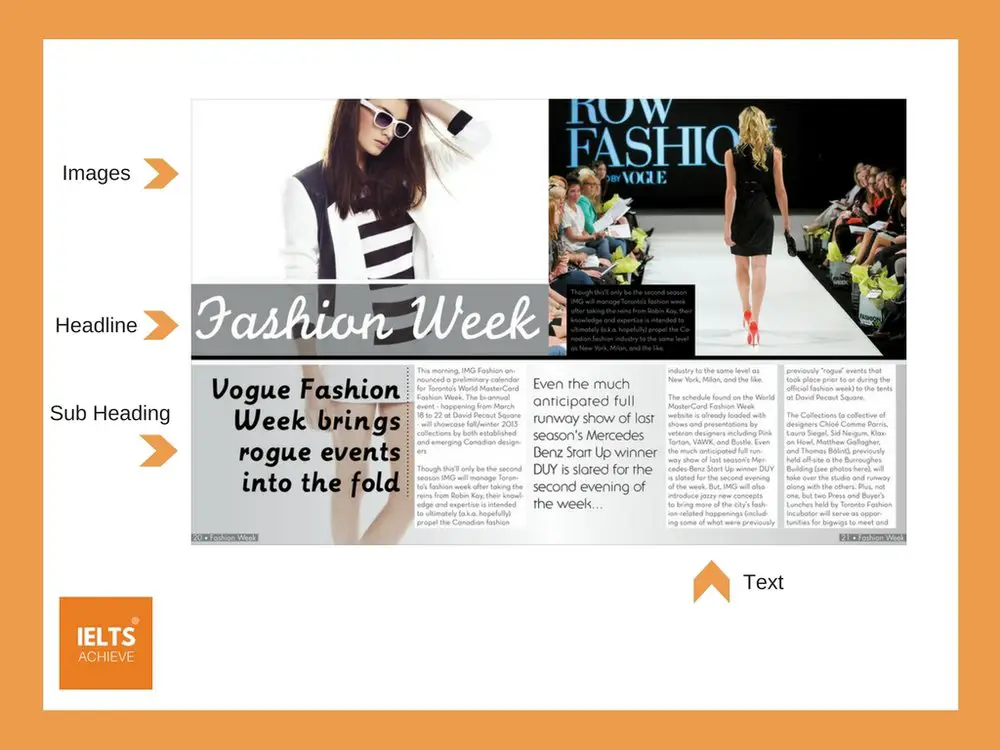
When you preview a text you look at the headings, the layout and any images to get an idea of what the text is about before you decide if you want to read it or not. For example, when you look at an article in a newspaper or a magazine, the headline and images give you an idea of what it is about. Previewing is an important skill to have because it helps you to foresee the content and this makes it easier to understand the text.
TIP >> Next time you read an article think about the headline, subheading and the images and think about the following questions – How do they draw you in to read more? How do they tell you what the article is about?
Predicting Content And Structure
This is when you use your knowledge and guess what a text is going to be about. For example, if you see an advert about adopting animals or donating to animal shelters, you would be able to guess the purpose of the text and the image(s) was to make you want to adopt an animal or help the shelters by donating money, therefore the vocabulary used would be related to this. Predicting is an important reading skill because you can make sense of a text when you already know about the topic.
TIP >>Practice by looking at adverts you see in magazines, online (blogs etc) and look at the vocabulary used and think about the following questions – How does it relate to the topic? How does it tell you about the purpose of the advert?
Source
Skimming
When you skim read a text for the main idea, you read the text quickly to get the general idea of the main topic. When you do this, you are looking for the main idea – not the specific details. For example, you may skim read the back cover of a book jacket to get an idea of what the book is about before you decide to read/buy the book. Skimming is an important skill because in the test you are time conscious, so you need to skim read texts in order to get the main idea, before locating specific information needed to answer questions.
TIP >> Practice skim reading by reading articles, reviews and summaries to get the main idea. Choose content that interests you, not only IELTS practice materials.
When you scan a text to find the information you also do this quite quickly to find what you need. You normally use this skill when you are looking for facts. For example, if you are looking for a train time or the departure gate you need at the airport, you scan the board’s looking for the information. Therefore, you use this skill every day when looking at times, dates or places.
TIP >> Practice scanning by looking for information in timetables, the TV guide etc and find facts you need quickly.
Intensive Reading
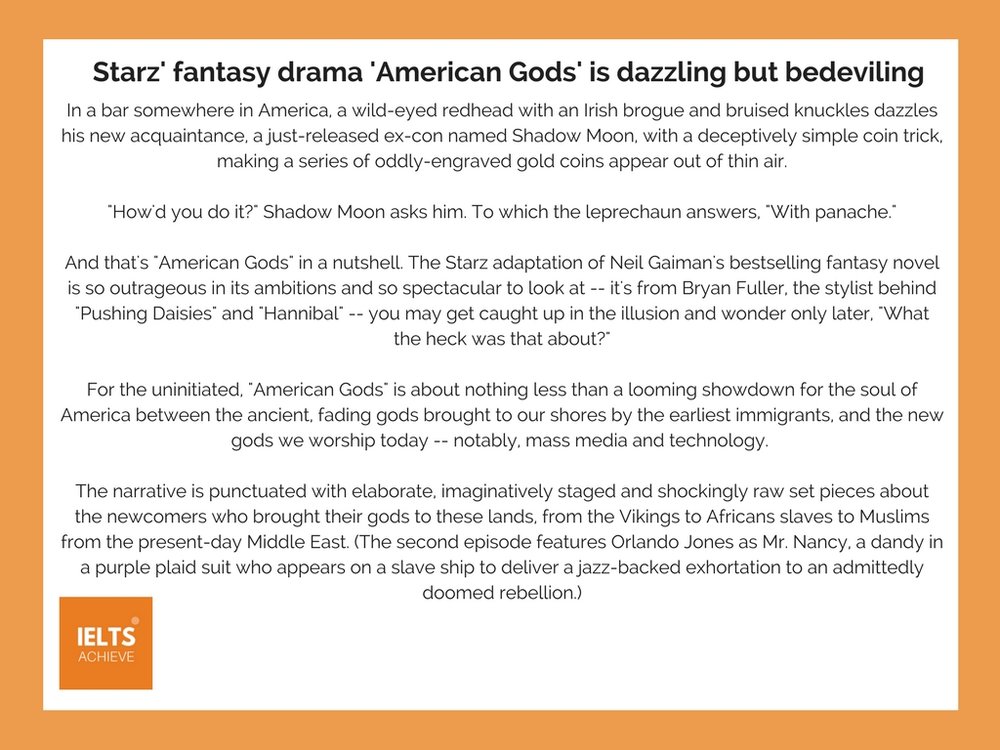
When you read a text carefully and study the information, this is intensive reading. You do this when the content is important. For example, if you had to fill out some important forms, like renewing your passport or filling out a tax return, you would read the instructions carefully, before filling out the forms. You need to read carefully for more detail when you need to understand the writer’s meaning. For instance, when reading a tv show review, you might want to read it intensively to find out the details to see if you want to watch it or not.
TIP >> Read reviews and other texts you find interesting and study the content. Think about how detailed the information is, do you understand the writer’s meaning?
Look at the review below of the TV Show ‘American Gods’ – How does the writer tell you what they think about the show?
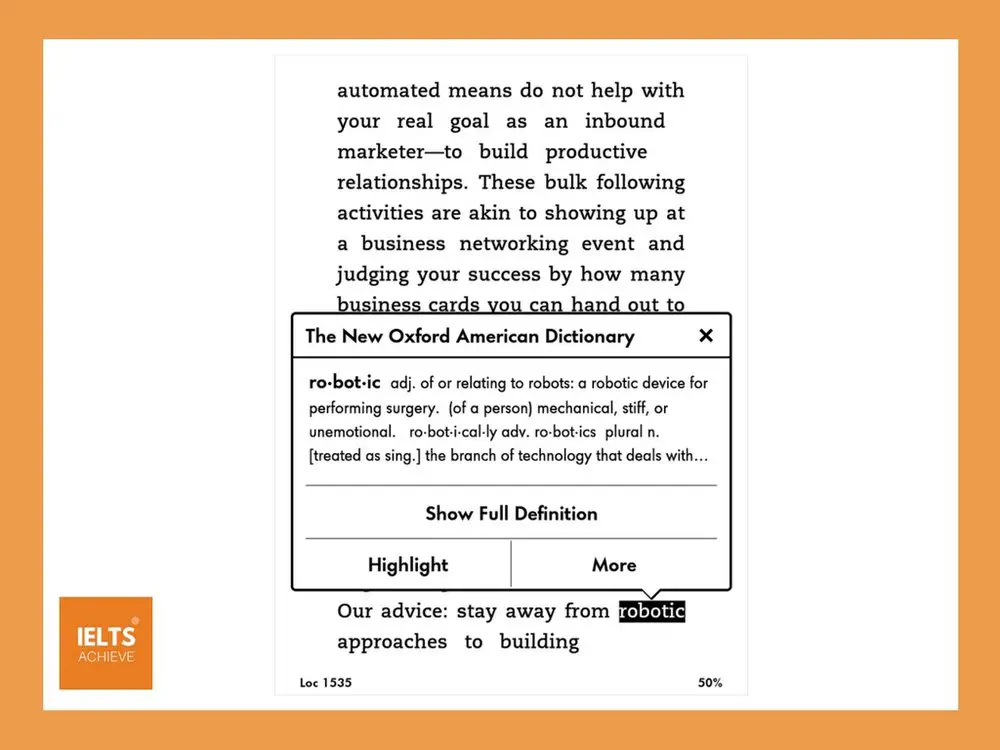
When you are reading and you come across a word or words you don’t know, you can sometimes guess the meaning from the context they are in. If not then you will have to look up the meaning in a dictionary (although this is not allowed in the test). For instance, if you were reading a book and you saw a word you did not know, you might be able to work out the meaning from the context of that sentence or paragraph.
TIP >> When you read – keep a dictionary and a notebook with you and write down any words you do not know the meaning of. Alternatively, you can do this easily if you use your smartphone or Ipad. If you have an e-reader, the built-in dictionary will show you the meaning of the words once highlighted. This is so useful for learning new vocabulary.
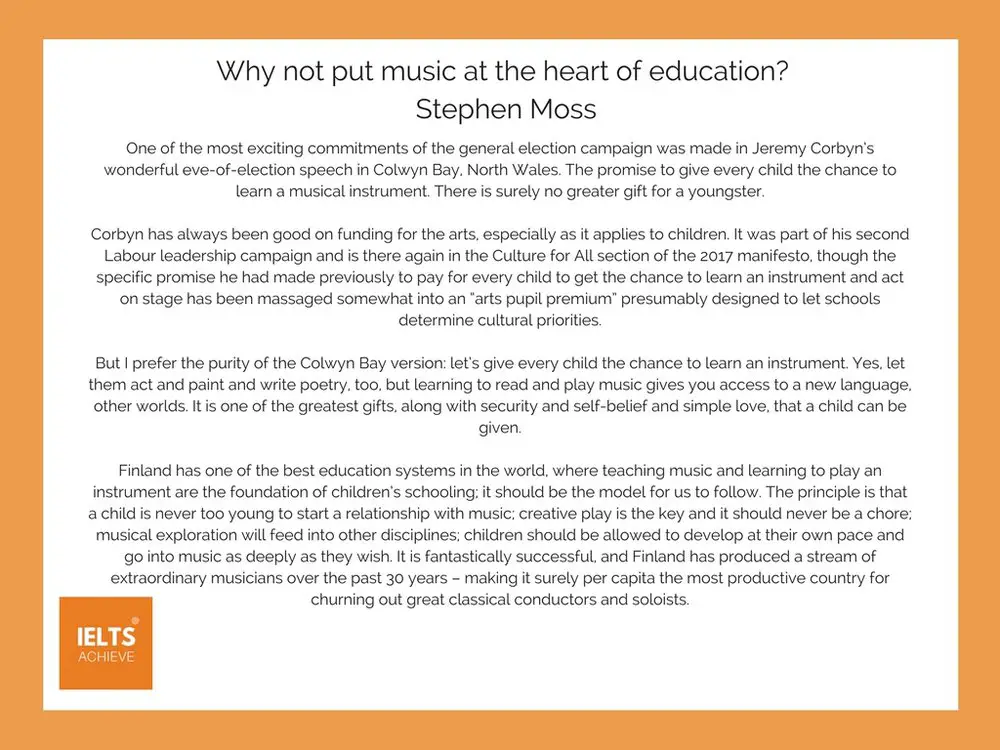
When you read a book, article etc, you should be able to understand how the writer feels or thinks about a subject. For example, in an article or blog about travelling, you may read views on certain places and how they feel when going there. This can help you to understand how they explain their opinions and views through the language they use. Understanding attitude and opinion are important skills because writers do not always clearly state how they think or feel.
TIP >> Read reviews or opinions from opinion sections of newspapers like The Guardian or The Washington Post. Think about how the writer shares their opinion – is it obvious? What language/vocabulary do they use? How can you tell what they are thinking or feeling?
Look at the opinion piece below from The Guardian – how does the writer share his opinion about the topic?
Read more – Read as much as you can in English, choose anything that interests you – not just IELTS practice materials. Read novels, magazines, news articles, blogs and anything else that holds your attention. Reading really helps with your writing, as you learn new vocabulary, grammar and understand how structures work.
Make a note of any new words – Write them down and look them up – this will help you to remember the words and their meaning.
Take note of the grammar – Think about the structures used, look at the sentences, the tenses and the punctuation.
Idea development – When reading news articles think about how the writer leads you through the information, how do they develop their ideas? How do they structure the writing? Where do they put the facts? The opinions?
Opinions – How do they share their opinions with the reader? What kind of language and structure do they use to do this?
Schedule some reading time – when you are travelling on your commute to work, lunchtime, before bed – try to fit in some reading.
We hope you found this post useful in helping you to study for the IELTS Test. If you have any questions please let us know in the comments below or on the Facebook page.
The best way to keep up to date with posts like this is to like us on Facebook, then follow us on Instagram and Pinterest.
If you need help preparing for the IELTS Test, join the IELTS Achieve Academy and see how we can assist you to achieve your desired band score. We offer an essay correction service, mock exams and online courses.
Step-by-step guide to answering this type of IELTS Writing Task 1 question. Covers structure, key language, and band-scoring criteria.
Originally published June 2017. Last reviewed 3 July 2026.
In this post, we will look at flowcharts, notes, tables, summaries and diagrams. It is very important that you will be able to >>
Understand information in flowcharts, diagrams and tables. These are used to give specific information for a fast analysis. In the test, you may have a table that you have to fill in, after finding the required information in an article.
Summaries and notes, a summary is a short review of something, you will often see this when looking for information about a book or movie, they will give you a short summary of what it is about. Notes can be in bullet form, with groups of words or single words, linked to a subject heading.
Read The Questions / Instructions
Before you start to read the information presented to you, first you must read the questions/instructions and think about the amount and type of information you can enter. If your answer does not follow the instructions given, then it will be marked as incorrect.
For example, you may be asked to;
Write no more than one word for each answer
Write no more than one word and/or a number for each answer
Write no more than two words for each answer
Write no more than three words for each answer
Finding Words In The Text
When reading information in a text you will be looking for specific information, that you can write onto a diagram, table or flowchart. This means you will use words that are in the text, paying close attention to the spelling. It is ok to copy words straight from the text, other forms of the word will be marked incorrect.
Read through the questions and skim read the text, can you answer the questions?
Dementia is a syndrome – usually of a chronic or progressive nature – in which there is deterioration in cognitive function (i.e. the ability to process thought) beyond what might be expected from normal ageing. It affects memory, thinking, orientation, comprehension, calculation, learning capacity, language, and judgement. Consciousness is not affected. The impairment in cognitive function is commonly accompanied, and occasionally preceded, by deterioration in emotional control, social behaviour, or motivation.
Dementia is a ……………….. which is usually continuous and gradual.
It can affect many cognitive functions, including ………………………………, …………………., or ………………….
According to the notes, dementia sufferers …………………… is not damaged.
Dementia can affect the ability to remember, awareness, direction and ………………
Answers >> Are at the bottom of the page.
Flowcharts
A flowchart is a graphic that shows the events of a process, normally in sequence. In the IELTS test, the flowchart questions are similar to the notes questions, but with arrows to tell you the sequence. When you read through the given text, the information presented may not be in the order of the flowchart.
Take a look at the information below and see if you can find the one-word answers that are missing…..
Climate change
Over the last 50 years, human activities – particularly the burning of fossil fuels – have released sufficient quantities of carbon dioxide and other greenhouse gases to trap additional heat in the lower atmosphere and affect the global climate. In the last 130 years, the world has warmed by approximately 0.85oC. Each of the last 3 decades has been successively warmer than any preceding decade since 18501. Sea levels are rising, glaciers are melting and precipitation patterns are changing. Extreme weather events are becoming more intense and frequent.
Answers >> Are at the bottom of the page.
Diagrams
There are different types of diagrams that you may see, including labelling a plan, or a design. The other types could be something from the natural world or a technical drawing. You may also see a diagram, for example, to read a text about the human body and then label parts of the body, using one-word (or more) answers from the text.
You may have a diagram that requires labelling from a selection of words in a box, try to understand what is happening in the diagram and where those words would fit. On the other hand, you may have a diagram that relates to a text you have to read and locate information relating to the diagram. Make sure you check how many words you need to write in the spaces, as writing too many will lose marks. Start with the most obvious and move on, if you are finding information in a text, read through quickly and don’t waste time trying to read the whole text and understand it.
The information you will see in a table can be looked at quickly, by looking at the headings and the information in each row. The tables present information, for example, a timetable, exam results or in this case below, IELTS band scores.
Look at the table above, and see if you can answer the following questions >>
What do you need to score in listening to get a band score of 7?
What do you need to score in Academic reading to get a band score of 8?
What do you need to score in General Reading for a band score of 6?
Answers >> Are at the bottom of the page.
Summaries
A summary is a brief explanation of the main points on a topic. You will use and see many summaries all of the time, from reading what a movie is about or a book, you summarise the story or events. When you see a summary of the reading test, quickly highlight or underline the keywords and think about paraphrasing.
Asthma is a major non-communicable disease characterised by recurrent attacks of breathlessness and wheezing, which vary in severity and frequency from person to person. Symptoms may occur several times in a day or week in affected individuals, and for some people become worse during physical activity or at night. During an asthma attack, the lining of the bronchial tubes swells, causing the airways to narrow and reducing the flow of air into and out of the lungs. Recurrent asthma symptoms frequently cause sleeplessness, daytime fatigue, reduced activity levels and school and work absenteeism. Asthma has a relatively low fatality rate compared to other chronic diseases.
Choose one word only for each answer.
The severity of Asthma varies in each person, some may have many …………. and others few.
Due to physical activities or in the evening, many sufferers say that they become…………….
When an attack happens, the air that flows into the lungs is restricted, with the ……………. becoming smaller.
Asthma does not cause many deaths in comparison to other ……………….. illnesses.
Answers >> Are at the bottom of the page.
REVIEW AND STRATEGY
The flowcharts, notes, tables, summaries and diagrams are common in the IELTS Reading Test, therefore you should practice and develop a strategy for answering.
TIP >> Read the instructions before you start reading the text. Make sure you understand the question.
TIP >> Study the diagram/flowchart and see how many words you need to write. For summaries, notes and tables, skim read and get the main idea.
TIP >> Highlight any keywords or labels you can see, then match them up if you see anything that stands out to you.
TIP >> Choose your answers carefully, be attentive to synonyms and paraphrasing and check your spelling.
Answers From All Exercises >>
Notes Answers >>
syndrome
deterioration in emotional control, social behaviour or motivation.
consciousness
comprehension
Flowchart Answers >>
carbon dioxide
decades
extreme
Diagram Answers >>
7. Spinal Nerve
8. Spinal Cord
9. Vertebra
10. Spinal Cord
Table Answers >>
33-35
36-37
26-30
Summary Answers >>
symptoms
worse
airways
chronic
We hope you found this post useful in helping you to study for the IELTS Test. If you have any questions please let us know in the comments below or on the Facebook page.
The best way to keep up to date with posts like this is to like us on Facebook, and then follow us on Instagram and Pinterest.
If you need help preparing for the IELTS Test, join the IELTS Achieve Academy and see how we can assist you to achieve your desired band score. We offer an essay correction service, mock exams, and online courses.