You should spend about 20 minutes on Questions 27-40, which are based on reading text 3.
Mental Health and the Effects of Social Media
Is Facebook making you depressed? If so, you’re not alone. According to a recent study by UK disability charity Scope, of 1500 Facebook and Twitter users surveyed, 62 percent reported feeling inadequate and 60 percent reported feelings of jealousy from comparing themselves to other users.
I’ve heard similar complaints from friends and I’ve felt it myself on a bad day. Most frequently, I hear such statements from those who are struggling with depression. It makes sense that if you are already in a low mood or not feeling good about yourself, having pictures of happy couples and smiling babies pop up on your screen on a consistent basis may make you feel worse. The same is true if you tend to generally have a negative outlook on life.
If Facebook posts depress you, the solution is simple. Here are four things you can do today to help you cope:
Deactivate your Facebook account (you can always reactivate it later)
Unfollow your most (seemingly) happy and successful, friends
Remember that Facebook isn’t a representation of reality
Turn off the computer and go make your own annoyingly happy moments
Should you really take the four actions above?
In a 2015 study on the effects of Facebook use on mental health, researchers at the University of Missouri discovered that regular use could lead to symptoms of depression if the site triggered feelings of envy in the user.
“If it is used as a way to size up one’s own accomplishments against others, it can have a negative effect,” said Professor Margaret Duffy, one of the professors who co-authored the research. She explains that if it’s used “to see how well an acquaintance is doing financially or how happy an old friend is in his relationship – things that cause envy among users – use of the site can lead to feelings of depression.”
However, those who use the site primarily to feel connected do not experience the negative effects. In fact, when not triggering feelings of envy, the study shows, Facebook could be a good resource and have positive effects on well-being.
Further studies have shown that the majority of social media users tend to edit and post only their most attractive pictures, or ‘put a rose-tinted gloss over their lives’ in an effort to idealise themselves and, researchers believe, to improve others’ impressions of them.
To avoid Facebook-induced depression, users should be aware of the risks of using the site as a tool for comparison. Furthermore, users should be aware that most people are presenting a biased, positive version of reality on social media. Finally, if you’re still feeling down, angry, or generally disillusioned because of the positive news shared by your Facebook friends, on or offline, you should question why you feel that way.
Barring clinical depression or a recent life setback, is it really such a bad thing to see another human being enjoying life, especially if it’s a friend- or at least someone you tolerate enough to accept as a Facebook friend?
With all of the suffering and pain in the world, wouldn’t it be a tragedy if people stopped sharing joyful events for fear of making someone else jealous? Imagine if people only discussed all of the negative things that surrounded them. Especially over this past year, don’t we have enough tragic posts appearing in our newsfeeds 24/7?
Given that there will always be someone who’s taller, richer, better-looking, who has more friends, a better job, etc., we can either allow ourselves to fall into the dangerous trap of comparison, or we can choose to remember that regardless of what others around you appear to have, everyone is grappling with their own struggles. For every promotion, a book deal and Tony nomination, chances are, the recipient has experienced equally or more significant life setbacks.
Also important to remember is that for every person that seems to have more, there is another with less. For each individual whose qualities you covet, there’s someone out there who wishes they had what you have. If we can’t change our outer circumstances, at least we can try to change our perspective and learn to be grateful for what we have. We can also learn to celebrate other’s successes. Sharing in other people’s joy can often lift our spirits.
“Be aware of what others are doing, applaud their efforts, acknowledge their successes, and encourage them in their pursuits. When we all help one another, everybody wins” – Jim Stovall
These suggestions may be difficult, especially if you’re struggling with low self-worth or depression. If that is the case, seek help from a friend or a professional. Whether it’s reaching out for support, practising gratitude or simply surrounding yourself with more of the positive, you owe it to yourself to make the best out of this life.
Stop torturing yourself by comparing your life with everyone else’s positively biased representations of theirs. Seek to improve your own life in a realistic manner. Choose to look at the positives and to celebrate your wins… as well as theirs.
Questions 27-32
Do the following statements agree with the claims of the writer in the text?
In boxes 27-32 on your answer sheet write
YES – if the statement agrees with the views or claims
NO – if the statement contradicts the views or claims
NOT GIVEN – it is impossible to say what the writer’s views/claims are
27. Social media makes many people unhappy
28. When people see photographs of others having fun it makes them feel really happy
29. There are steps you can take to lessen the effects of social media on your wellbeing
30. Research shows how certain aspects can make you feel good about yourself
31. Ask for help on Facebook and Twitter
32. Seek positivity in your own life and stop comparing yourself to others
Questions 33-40
Complete the summary below.
Choose NO MORE THAN TWO WORDS from the text for each answer.
Write your answers in boxes 33-40 on your answer sheet.
Mental Health And Social Media
There is a desire among most people to check their social media accounts obsessively with many people feeling 33. ……………………….. when they compare their lives to others. This is often felt by those suffering from depression or who have simply had a bad day. When looking through your newsfeed and seeing photographs of people having a great time, could make you feel 34. …………………………… There are steps that can be taken to reduce these feelings, including removing yourself from Facebook or other social media accounts. Another step is to leave the computer alone and go and do something you enjoy. Research has shown that looking at Facebook obsessively can point your mental health into the direction of 35 ………………………………….. When comparing your life to those that you see on social media feeds it can have a 36………………………………. effect. When people start to envy others on social media, it can lead to a person thinking badly about their own lives and themselves. Those people who use Facebook to keep in touch with friends and family experience more 37…………………………………. effects. Research also shows that most people who post photographs, heavily edit in an attempt to make others see them how they want to be seen. It is important to think about how everyone has their own problems in the world, glamorous people on Facebook included. For each person you see who inspires you to crave what they have, there are others who want what 38 ……………………………………… We should be happy for others good fortune and learn to be grateful for our own successes. If you feel like you are having difficulties with depression or low 39 …………………………………. ask for help. Even if you talk through it all with a good friend or colleague or envelop yourself in a more positive environment, small changes can make sure that you get 40 ………………………………. out of your life.
If you need help to answer these questions with extra practice please read the posts below >>
We hope you found this post useful in helping you to study for the IELTS Test. If you have any questions please let us know in the comments below or on the Facebook page.
The best way to keep up to date with posts like this is to like us on Facebook, then follow us on Instagram and Pinterest.
If you need help preparing for the IELTS Test, join the IELTS Achieve Academy and see how we can assist you to achieve your desired band score. We offer an essay correction service, mock exams and online courses.
Essential strategies and practice techniques for this IELTS Reading question type. Learn how to manage time and improve accuracy.
Originally published June 2017. Last reviewed 3 July 2026.
In this post, we will take a look at the reading skills you need to be successful in the IELTS Reading Test and how you can improve your skills.
There are 7 main reading skills you will use during your preparation for the IELTS Reading Test;
Previewing
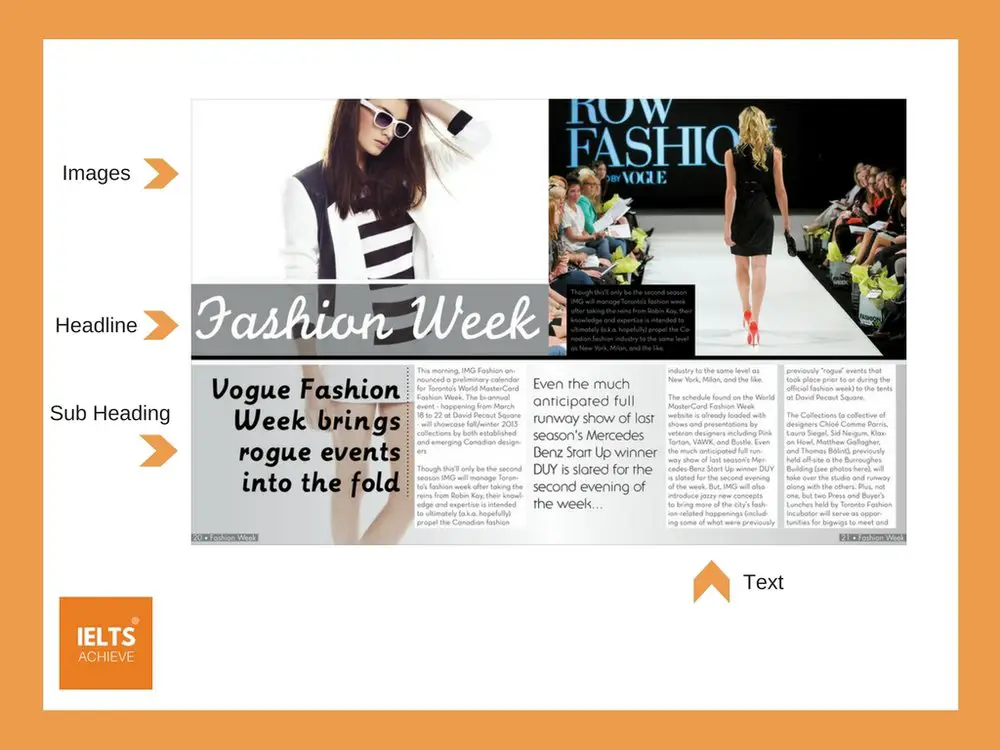
When you preview a text you look at the headings, the layout and any images to get an idea of what the text is about before you decide if you want to read it or not. For example, when you look at an article in a newspaper or a magazine, the headline and images give you an idea of what it is about. Previewing is an important skill to have because it helps you to foresee the content and this makes it easier to understand the text.
TIP >> Next time you read an article think about the headline, subheading and the images and think about the following questions – How do they draw you in to read more? How do they tell you what the article is about?
Predicting Content And Structure
This is when you use your knowledge and guess what a text is going to be about. For example, if you see an advert about adopting animals or donating to animal shelters, you would be able to guess the purpose of the text and the image(s) was to make you want to adopt an animal or help the shelters by donating money, therefore the vocabulary used would be related to this. Predicting is an important reading skill because you can make sense of a text when you already know about the topic.
TIP >>Practice by looking at adverts you see in magazines, online (blogs etc) and look at the vocabulary used and think about the following questions – How does it relate to the topic? How does it tell you about the purpose of the advert?
Source
Skimming
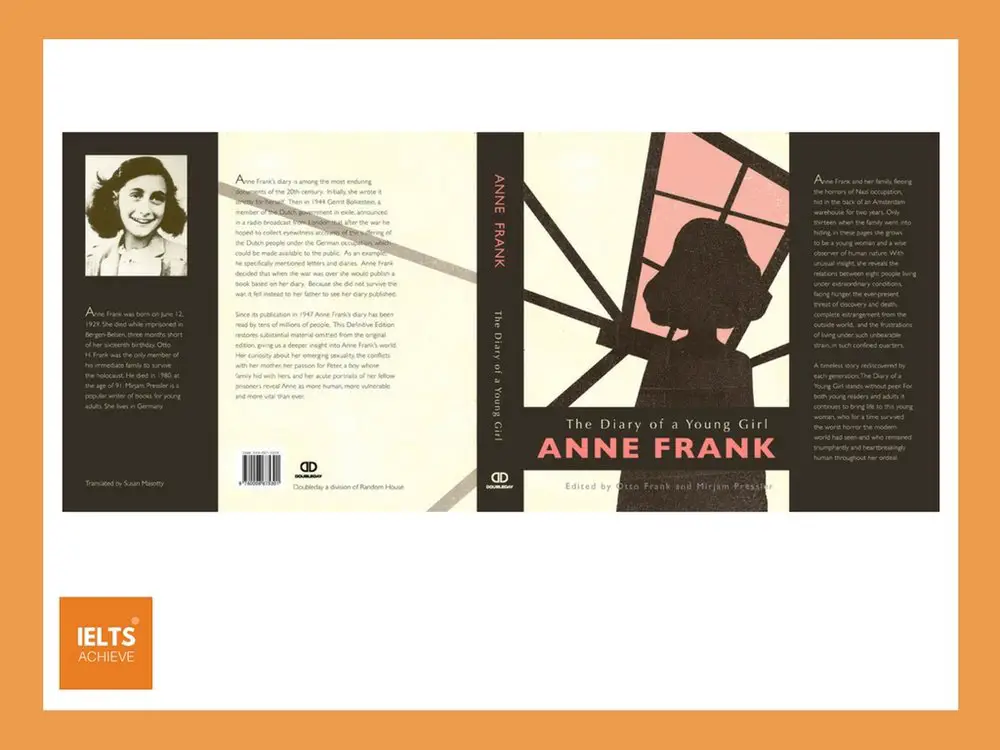
When you skim read a text for the main idea, you read the text quickly to get the general idea of the main topic. When you do this, you are looking for the main idea – not the specific details. For example, you may skim read the back cover of a book jacket to get an idea of what the book is about before you decide to read/buy the book. Skimming is an important skill because in the test you are time conscious, so you need to skim read texts in order to get the main idea, before locating specific information needed to answer questions.
TIP >> Practice skim reading by reading articles, reviews and summaries to get the main idea. Choose content that interests you, not only IELTS practice materials.
When you scan a text to find the information you also do this quite quickly to find what you need. You normally use this skill when you are looking for facts. For example, if you are looking for a train time or the departure gate you need at the airport, you scan the board’s looking for the information. Therefore, you use this skill every day when looking at times, dates or places.
TIP >> Practice scanning by looking for information in timetables, the TV guide etc and find facts you need quickly.
Intensive Reading
When you read a text carefully and study the information, this is intensive reading. You do this when the content is important. For example, if you had to fill out some important forms, like renewing your passport or filling out a tax return, you would read the instructions carefully, before filling out the forms. You need to read carefully for more detail when you need to understand the writer’s meaning. For instance, when reading a tv show review, you might want to read it intensively to find out the details to see if you want to watch it or not.
TIP >> Read reviews and other texts you find interesting and study the content. Think about how detailed the information is, do you understand the writer’s meaning?
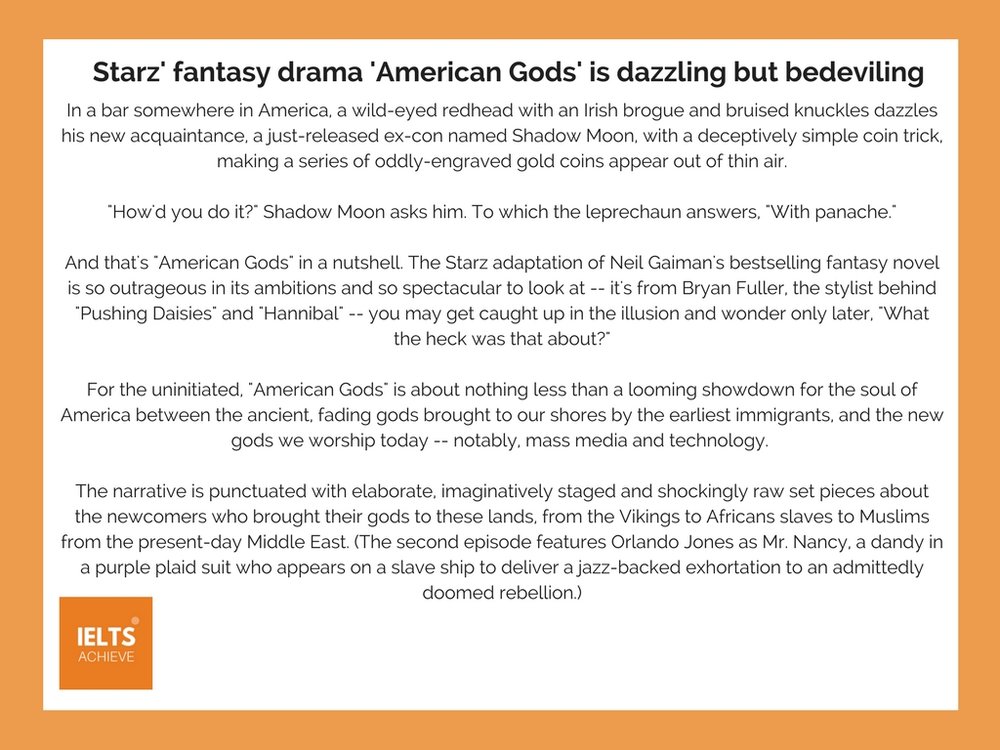
Look at the review below of the TV Show ‘American Gods’ – How does the writer tell you what they think about the show?
When you are reading and you come across a word or words you don’t know, you can sometimes guess the meaning from the context they are in. If not then you will have to look up the meaning in a dictionary (although this is not allowed in the test). For instance, if you were reading a book and you saw a word you did not know, you might be able to work out the meaning from the context of that sentence or paragraph.
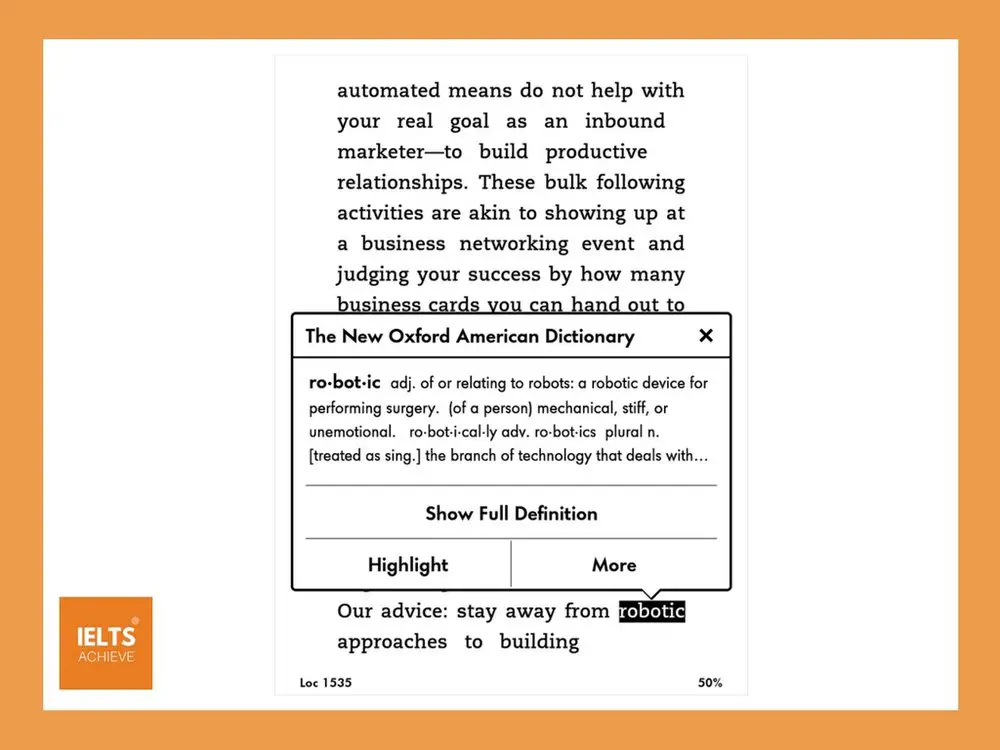
TIP >> When you read – keep a dictionary and a notebook with you and write down any words you do not know the meaning of. Alternatively, you can do this easily if you use your smartphone or Ipad. If you have an e-reader, the built-in dictionary will show you the meaning of the words once highlighted. This is so useful for learning new vocabulary.
When you read a book, article etc, you should be able to understand how the writer feels or thinks about a subject. For example, in an article or blog about travelling, you may read views on certain places and how they feel when going there. This can help you to understand how they explain their opinions and views through the language they use. Understanding attitude and opinion are important skills because writers do not always clearly state how they think or feel.
TIP >> Read reviews or opinions from opinion sections of newspapers like The Guardian or The Washington Post. Think about how the writer shares their opinion – is it obvious? What language/vocabulary do they use? How can you tell what they are thinking or feeling?
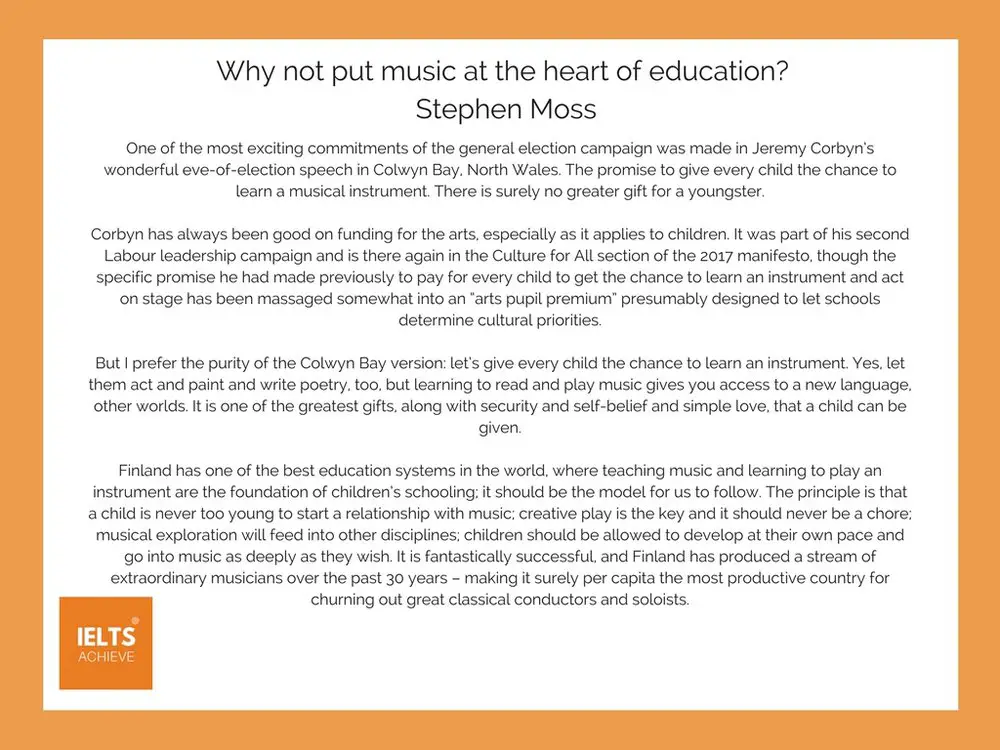
Look at the opinion piece below from The Guardian – how does the writer share his opinion about the topic?
Read more – Read as much as you can in English, choose anything that interests you – not just IELTS practice materials. Read novels, magazines, news articles, blogs and anything else that holds your attention. Reading really helps with your writing, as you learn new vocabulary, grammar and understand how structures work.
Make a note of any new words – Write them down and look them up – this will help you to remember the words and their meaning.
Take note of the grammar – Think about the structures used, look at the sentences, the tenses and the punctuation.
Idea development – When reading news articles think about how the writer leads you through the information, how do they develop their ideas? How do they structure the writing? Where do they put the facts? The opinions?
Opinions – How do they share their opinions with the reader? What kind of language and structure do they use to do this?
Schedule some reading time – when you are travelling on your commute to work, lunchtime, before bed – try to fit in some reading.
We hope you found this post useful in helping you to study for the IELTS Test. If you have any questions please let us know in the comments below or on the Facebook page.
The best way to keep up to date with posts like this is to like us on Facebook, then follow us on Instagram and Pinterest.
If you need help preparing for the IELTS Test, join the IELTS Achieve Academy and see how we can assist you to achieve your desired band score. We offer an essay correction service, mock exams and online courses.
Essential strategies and practice techniques for this IELTS Reading question type. Learn how to manage time and improve accuracy.
Originally published June 2017. Last reviewed 3 July 2026.
In this post, we will be looking at how you can understand the IELTS Reading Test Band Scores for both the Academic Test and The General Training Test.
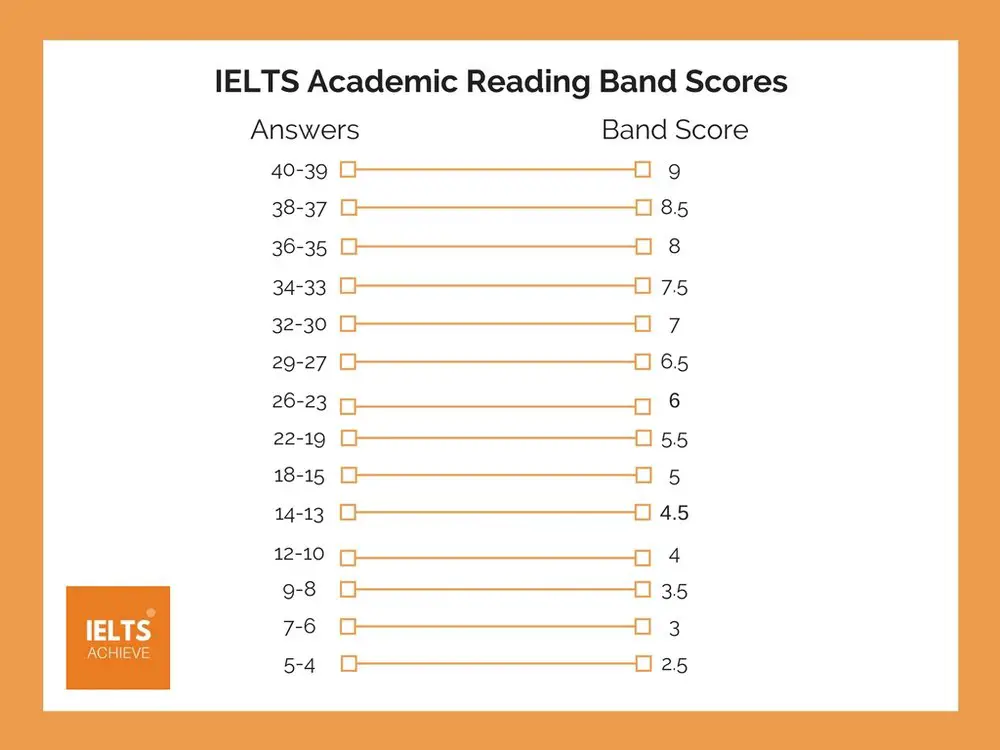
The IELTS Reading Test has 40 questions with each correct answer given one mark. The score you get out of 40 is then converted into a band score. The scores are reported in both whole and half bands.
IELTS Reading Band Score Calculator.
Calculate Your IELTS Reading Band Score
The main difference between the Academic and General Training Reading tests are the type of reading texts the students are given.
General Training
IELTS General Reading Band Score
The General Training texts are generally a bit easier to comprehend, with information from flyers, job descriptions, train timetables, travel brochures, an extract from a novel or job application instructions.
Number of correct answers
IELTS General Training Reading Band Score
40
9
39
8.5
37-38
8
36
7.5
34-35
7
32-33
6.5
30-31
6
27-29
5.5
23-26
5
19-22
4.5
15-18
4
12-14
3.5
9-11
3
Academic
IELTS Academic Reading Band Score
The Academic texts are more difficult, usually taken from magazines, newspapers, journals and research. These feature more complex ideas and vocabulary.
The tables below show the average number of marks required to attain a certain band score in Academic Reading and General Training Reading.
Number of correct answers
IELTS Academic Reading Band Score
40-39
9
38-37
8.5
36-35
8
34-33
7.5
32-30
7
29-27
6.5
26-23
6
22-19
5.5
18-15
5
14-13
4.5
12-10
4
9-8
3.5
7-6
3
5-4
2.5
We hope you found this post useful in helping you to study for the IELTS Test. If you have any questions please let us know in the comments below or on the Facebook page.
The best way to keep up to date with posts like this is to like us on Facebook, then follow us on Instagram and Pinterest.
If you need help preparing for the IELTS Test, join the IELTS Achieve Academy and see how we can assist you to achieve your desired band score. We offer an essay correction service, mock exams and online courses.
Essential strategies and practice techniques for this IELTS Reading question type. Learn how to manage time and improve accuracy.
Originally published June 2017. Last reviewed 3 July 2026.
In this post, see the top 5 reading tips that will help you to achieve a band score 7 or above.
In the IELTS Reading Test for both the General Training and the Academic, the skills needed are the same. The main difference of these tests is the type of texts the students will read. In the General Training Reading Test, the students will read both long and short texts taken from newspapers, flyers, timetables, etc. The Academic students will have 3 long texts that will progressively get more difficult. They will be taken from journals, newspapers, books etc.
You will have 40 questions to answer in 60 minutes, with no extra time to transfer your answers to the answer sheet.
Here is a list of the different types of IELTS reading questions:
Always make sure that you read the instructions before you start looking at the questions or text. The instructions for the reading test are very specific – meaning if you don’t follow them exactly you will lose marks.
For example, if the instructions say to only write one word – then look for one-word answers. If you write more than that your answer will be marked as incorrect. The same goes for two-word answers or three, look for the amount of words or numbers that you are allowed to write.
TIP 2: Be Aware Of Timing
Ideally, you should spend around 20 minutes or just under on each text as you have 60 minutes to complete the reading test. In that 20 minutes – look at one text, answer the questions, transfer them to the answer sheet and check them. It is important that you leave yourself enough time to transfer your answers onto the answer sheet and check them.
Practice as much as you can with sample tests, looking at those that challenge you as well as other texts that you find slightly easier. The more difficult texts can take more time, so be aware of how much time you spend on those, practising skimming and scanning skills to increase your reading speed.
TIP 3: Answer Every Question
Try to answer every question, even if you are not 100% sure of the answer. Many students report leaving gaps on their answer sheet because they did not know the answer or they ran out of time. You can try your best to answer each and every question.
TIP 4: Forget What You Know Already
The IELTS Reading Test is testing your ability to understand information in the texts you are given. So don’t think about your previous knowledge on the topic, only focus on the text in front of you.
TIP 5: Paraphrasing, Synonyms And Vocabulary
It is really important to study all forms of English when studying for the IELTS Test, looking at how a text is paraphrased, learning new words and using synonyms. Reading more will definitely help you to develop your vocabulary knowledge, as well as recognising synonyms.
When you are studying, use an online thesaurus to check for synonyms and meanings and if you are reading longer complex texts, keep a notebook of words you do not know and their meaning. You will also see how ideas are connected, which can help you in the writing tasks also.
When studying for the IELTS Reading Test, it is important that you take the time to learn how to increase your reading speed, if you are aiming for a band score 7 or higher. During the reading test, you will have texts to read comprising of 1000+ words each. You will not have enough time in the 60 minutes given to read and understand every word in detail. Therefore you must practice with sample tests and learn how to skim read, scan and speed up!
Skimming and Scanning
The differences between skim reading and scanning are;
Skimming – a text quickly for the main ideas.
Scanning – looking through a text for specific details.
Skim reading a text means to read it quickly to find the main idea, it will also show you how the information has been organised. With practice, you should be able to skim read around 100 words in 30/40 seconds.
Scanning a text for specific details is another important skill to develop, as this can help you to find information quickly, like dates, numbers or names.
For more in-depth information on skimming and scanning please take a look at this post.
Speed Reading
Learning how to increase your reading time will give you many advantages in the reading test, including being able to get a higher band score.
By practising speed reading, you will understand the main ideas quickly and be able to locate the information you need in order to answer the questions. Here are some tips to help you to get started >>
TIP 1 >> Cover It Up
Use a blank sheet of paper to cover the words as you read down the page. this can help to stop your eyes from jumping back to text you have already read.
TIP 2 >> Use A Pencil/Pen To Guide You
Try following the words on the page with a pencil or pen, it can help to increase the speed that you go through the text.
TIP 3 >> Time Yourself
Try timing yourself when you are reading practice texts, how much can you go through in 30/40 seconds? How much of that did you understand?
TIP 4 >> Set Goals
Start practising with sample texts and see how much you can read in two minutes, three minutes or five. then, cut that time down less and less and see how much information from the texts you can remember.
TIP 5 >> Look After Yourself
Know when you work best and set aside some time to prepare. If you work best in the mornings (or evenings), set some time to practice in a quiet environment if you can. Rest those eyes and have a break after 30/60 minutes.
Exercise 1
Read the text below taken from an article on the BBC News Website. There are four paragraphs, each with around 100 words.
Using a timer – read through the text to understand the main idea
After only 30 seconds start reading the next paragraph
A
“Mean-spirited” and “wrong-headed” is how teachers’ leaders have described Theresa May’s plan to scrap free school meals for infant pupils in England. And perhaps to some, it may seem bullish to deny the youngest kids a free lunch, even if free breakfast is on offer. The move has sparked taunts of “May, the meals snatcher” – reminiscent of Margaret Thatcher’s infamous cancelling of free school milk. But to Theresa May’s Conservatives, it was a policy that no longer added up. The party does not believe “a free school lunch for every child in the first three years of primary school… is a sensible use of public money”.
B
It’s one of those tough decisions – but a free breakfast, cheap at a 10th of the price, now seems a more desirable alternative to the Conservatives – although the value of the free-lunch scheme has never been assessed. For some, the idea – brought in by the coalition government in 2014 – was always too expensive. It was very much a Liberal Democrat policy and plans were announced by Nick Clegg at his party’s conference in 2013. It was not long before his man in the education department, the then schools minister David Laws, was accused of understating the costs of the policy itself.
C
They say the pressures on their budgets are much more about the unfunded extra costs of teachers’ pay, pensions and national contributions. Valentine Mulholland, head of policy at the National Association of Head Teachers, said: “After the nightmare of bringing this policy in at breakneck speed and all the capital funding spent to upgrade kitchens and dining facilities, it’s pretty sad to see this U-turn.” A BBC News Freedom of Information request just six months before it was due to come into force, in September 2014, found 2,700 primary schools needed new catering facilities before they could even think about offering free meals to all infant pupils.
D
Mr Courtney’s claim may seem alarmist to some, but it will ring true for many teachers, who often raise the issue of pupil hunger. Nicky Gillhespie, the school business manager at Cheam Fields Primary, said things were very different before her school introduced free school meals.”We had children coming in with nothing. “There were some who’d been given a pound by their parents to stop and get something in the sweet shop for lunch on the way to school,” she said. The school in Cheam, south London, had no kitchen when the free school meals pledge was made and dinners were driven over to the school by a catering firm.
Questions
Look at the questions below and answer without looking back at the paragraphs for detail, try to remember where you read this information >>
Question 1.1
A – At the beginning
B – In the middle
C – At the end
1. A comparison of school meals now and in the past
2. Many kitchens and canteens had been renovated
3. Some pupils were given little money to buy food/snacks
Skim read the paragraphs for the answers to the following questions >>
Question 1.2
Which of the titles below would be most appropriate for this article?
A. Children’s school dinners are badly prepared
B. Free school dinners are no longer an option
C. Why free school dinners are soon to be forgotten
D. Why kids love free school lunches
Question 1.3
Which of the following describes the writer’s tone in this article extract?
A. She is giving a neutral account
B. She is showing how shocked she is that school dinners may no longer be free
C. She shows her enthusiasm for the government’s response to school dinners
D. She doubts that the situation will change in the future
Answers are at the bottom of the page.
Review and Strategy
TIP >> Skim read the text for the main idea – don’t worry if you do not understand all of it, read what you need to answer the questions and move on.
TIP >> Know your timing for each question – three texts with 20 minutes each – including transfer time. Answer the easier questions first, so that you can spend a little longer on the hard questions. The easier questions should come first, as the texts get progressively more difficult.
TIP >> Read the instructions before you do anything – understand what you have to look for before you start reading the questions and the text.
TIP >> Use your other reading skills to help you to increase your reading speed and get the best band score possible!
Answers >>
Question 1.1
A – 1
B – 2
C – 3
Question 1.2
C
Question 1.3
A
We hope you found this post useful in helping you to study for the IELTS Test. If you have any questions please let us know in the comments below or on the Facebook page.
The best way to keep up to date with posts like this is to like us on Facebook, then follow us on Instagram and Pinterest.
If you need help preparing for the IELTS Test, join the IELTS Achieve Academy and see how we can assist you to achieve your desired band score. We offer an essay correction service, mock exams and online courses.